
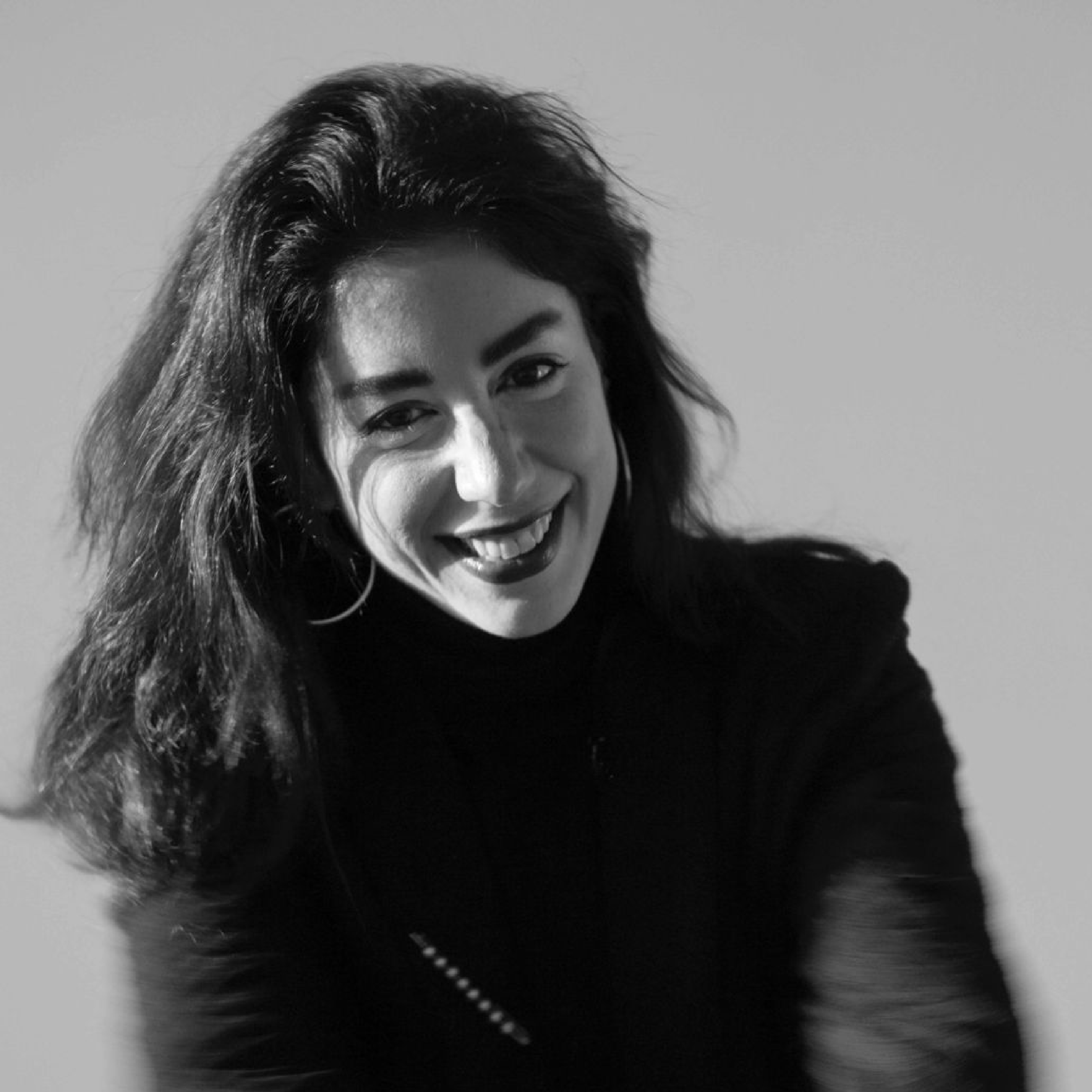
In Unfolding Realities, a joint exhibition between Amman’s Khuzamah Abujoudeh Gallery and Beirut’s Galerie Tanit, curator Randa Sadaka brings together Tamara Haddad and Ghassan Zard, two artists whose visual languages diverge yet meet through a shared sensitivity to perception, space, and emotion. Haddad grounds her practice in landscapes shaped by memory, silence, and environmental witness. Zard, by contrast, works through gesture, rhythm, and chromatic movement. The dialogue that unfolds between Amman and Beirut invites viewers to question what is seen, what is felt, and how the two can mirror each other.
This exhibition brings together two artists whose visual languages are distinct yet deeply attuned. How did the dialogue between Ghassan Zard and Tamara Haddad begin to take shape in your mind? What commonalities and contrasts did you build on to bring this duality to life?
The starting point of this adventure is, as always, the human element.
The intention behind this collaboration stems from a desire to work with Naila Kettaneh Kunigh, a great lady of the arts with whom I have had the chance to collaborate on several occasions, and her gallery Tanit, alongside a newcomer on the Jordanian art scene: Khuzamah Abujoudeh’s space in Amman. The promotion of landscapes and the exploration of color within a complementary narrative appeared to us as a relevant project, linking Ghassan Zard’s realm of abstraction to Tamara Haddad’s horizon.
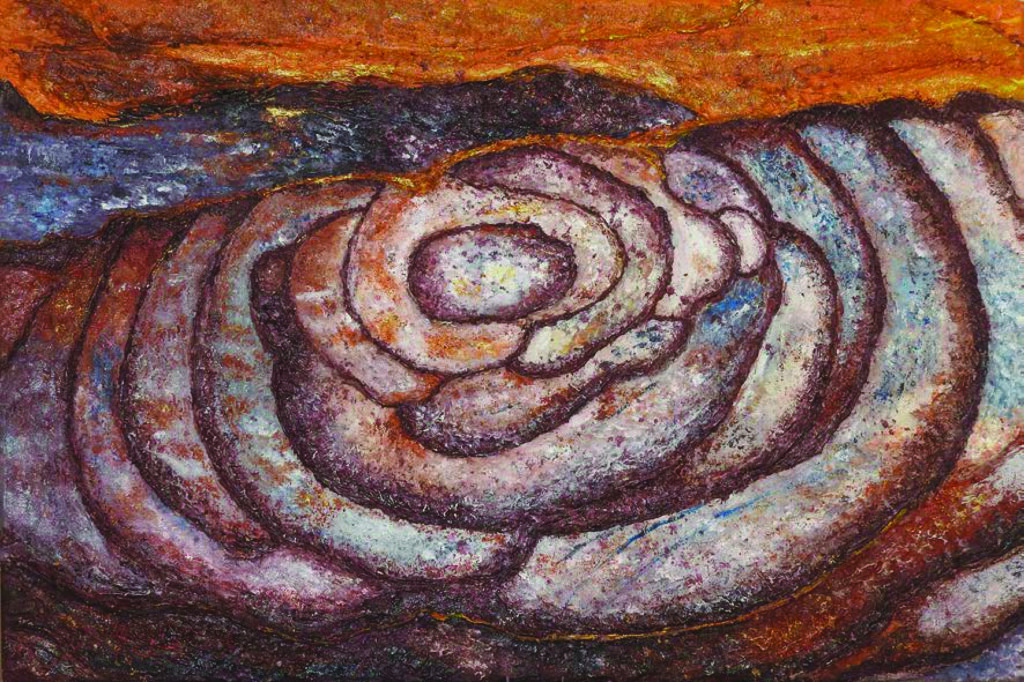
Tamara Haddad Petra, the Rose of Stone 2025 Oil, Acrylic, Sand on Canvas 60 cm x 90 cm
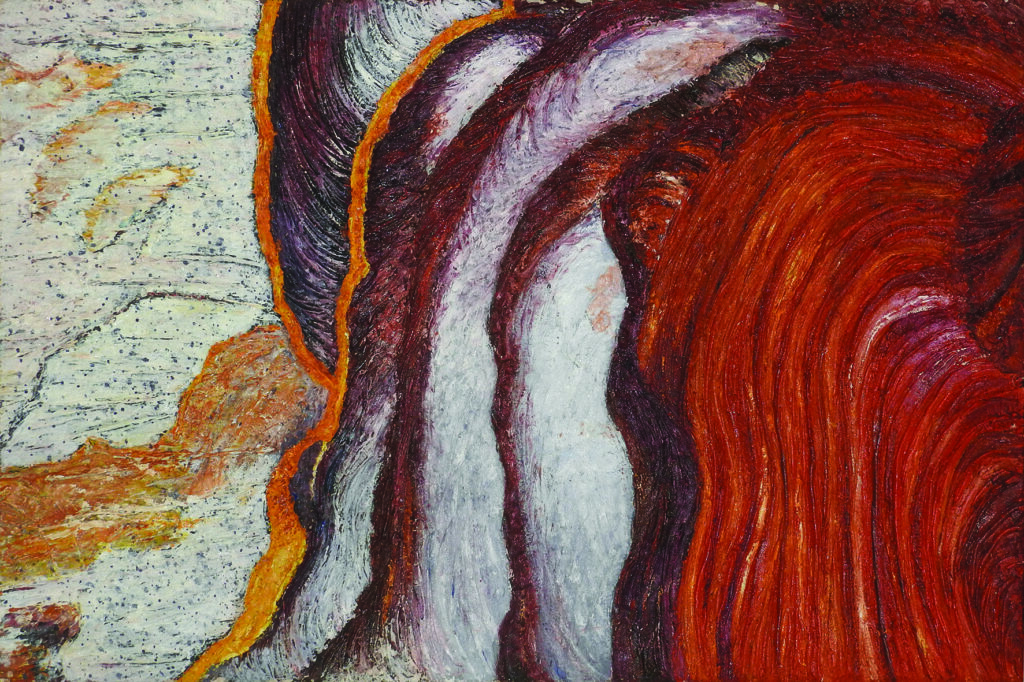
Tamara Haddad Petra, Symphony of Stone IV 2025 Oil, Acrylic, Sand on Canvas 60 cm x 90 cm
How did you approach building the exhibition’s scenography— in terms of what the viewer encounters, the rhythm between the works, or the atmosphere you wanted to create?
The warmth of Petra’s landscapes emanates from the heart of Tamara Haddad, enveloping the visitor in a gentle embrace. Ghassan Zard’s experimental chromatic approach bathes the viewer in light. Bringing them together, the installation creates a dialogue between two distinct universes, suggesting an intimate scenography in which the audience is free to fully immerse themselves.
Ghassan Zard’s work often focuses on the act of painting itself — on color, gesture, and surface. What drew you to this body of work, and how does it speak within the context of the exhibition?
Through his oils and watercolors on paper, and his acrylics on canvas, the artist reveals himself as an exceptional colorist, using the exploration of color as a central element of his work. His palette, both subtle and vibrant, reflects a rare inner sensitivity.
In the context of the exhibition, his work acts as a pictorial breath: it brings painting back to its essence—sensitive and intuitive—while engaging in dialogue with the more narrative approaches of his fellow artist.
Tamara Haddad presents new oil landscapes, including works made as a tribute to Jordan. What kind of perspective or sensibility do you feel she brings into this conversation with Zard?
Tamara Haddad approaches landscape as a space of memory. She brings a meditative, almost contemplative, sense of place. Her landscapes convey the presence of the land, its silences, and the strength of its grounding.
In dialogue with Zard, she adds a poetic sensitivity, where nature becomes a mirror of the soul. Together, their works create a conversation between what is seen and what is felt.
The exhibition invites viewers to question what they perceive as real. How do you see each artist engaging with this idea of perception — of what is seen and what is felt? How do their perspectives and visions speak to each other in bringing this idea to life?
Ghassan Zard explores painting through color and gesture, seeking how emotion can become a visual language. Tamara Haddad turns the landscape into a space for inner reflection. They show that reality is constantly shaped by our imagination.
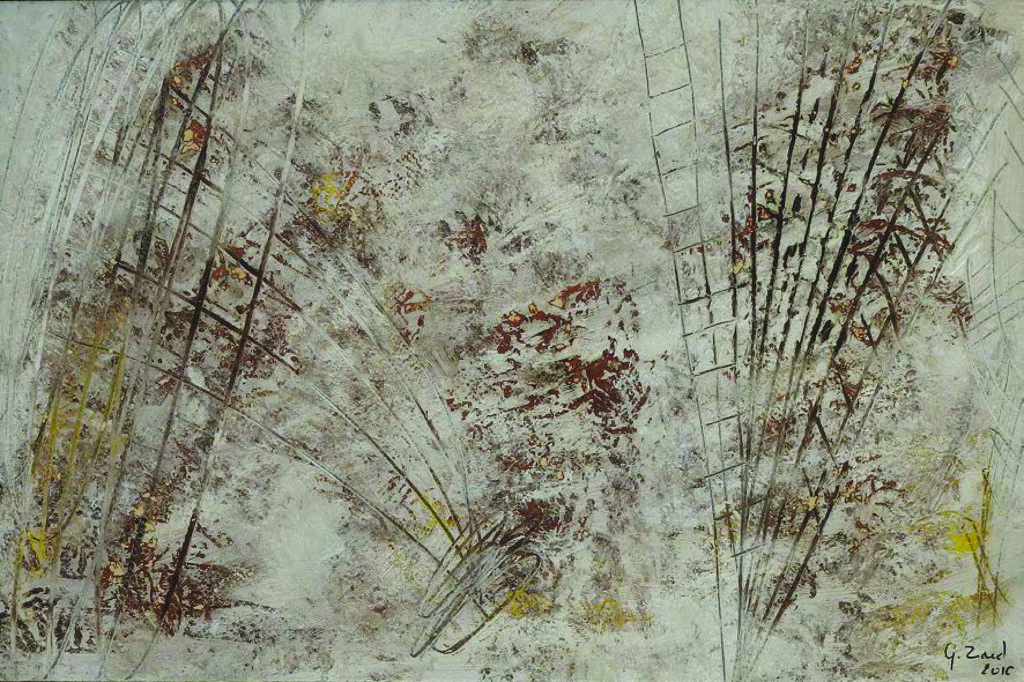
Ghassan Zard – 2010 Oil On Paper Laminated on Wood 30 cm x 45 cm
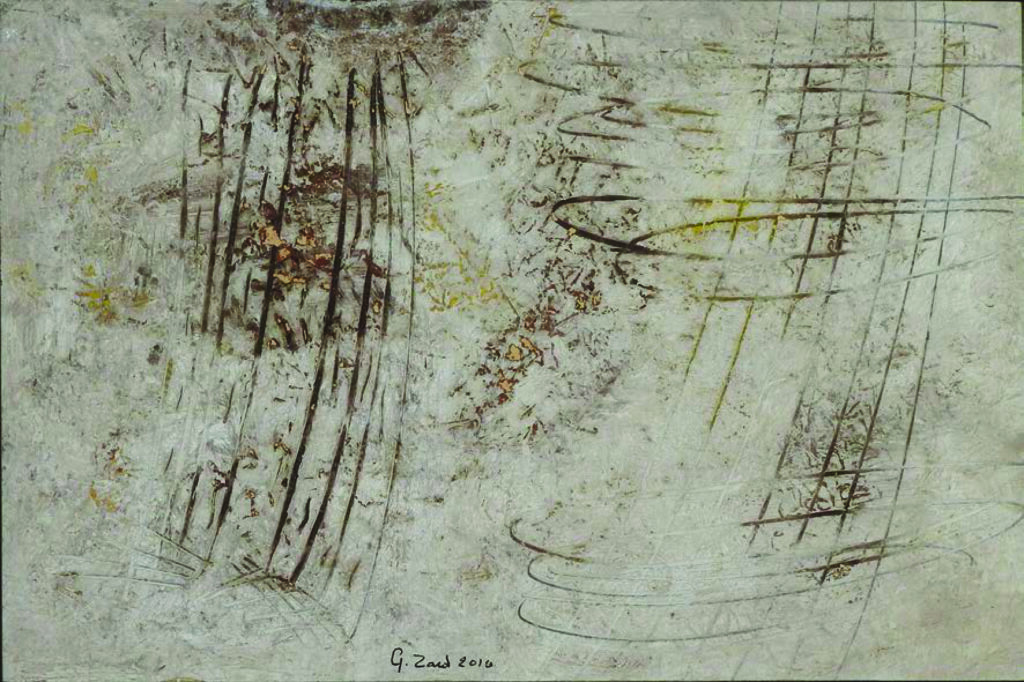
Ghassan Zard – 2010 Oil On Paper Laminated on Wood 30 cm x 45 cm
The notion of a “sensitive cartography” runs through the curatorial text. What kinds of territories — emotional, visual, or conceptual — are the artists mapping together?
They create a map where emotion becomes territory, showing landscapes that are universal, or understandable by all.
The collaboration between Khuzamah Abujoudeh Gallery and Galerie Tanit extends the conversation between Amman and Beirut. Did this cross-cultural context shape the project in any way?
Absolutely. As a curator, I am deeply committed to dialogues that go beyond geography. Thanks to the trust of both gallerists, the collaboration between Khuzamah Abujoudeh Gallery and Galerie Tanit fully embodies this spirit: it creates a space where Amman and Beirut converse through art rather than through distance. This intercultural context is at the heart of the project, giving the works a resonance that extends beyond their local roots.
What do you hope visitors carry with them after experiencing this exhibition — a particular question, feeling, or shift in perception?
May they leave wondering what is real, realizing that the answer always depends on what they feel!