
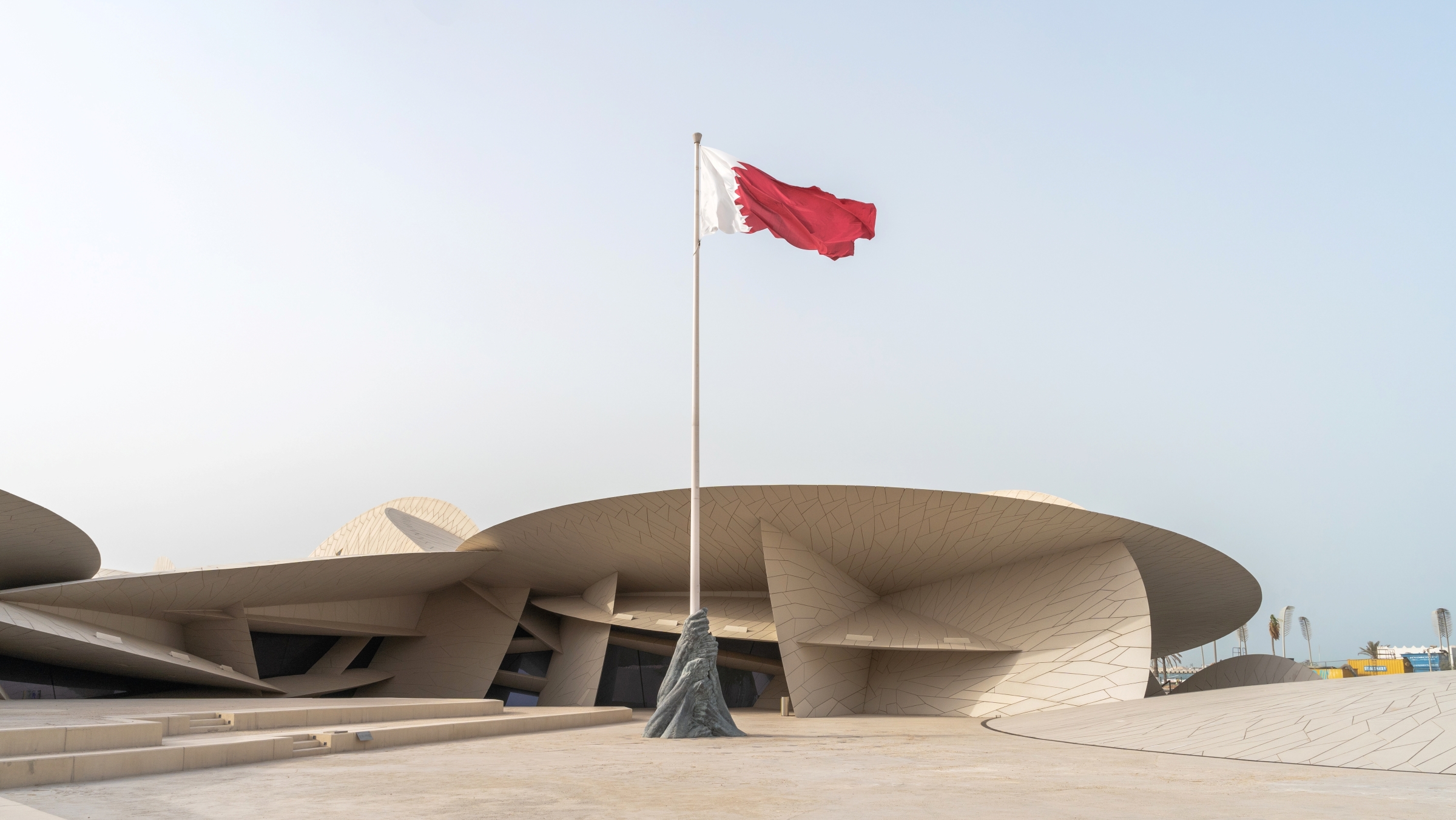
National Museum of Qatar
How five decades of collecting, institutional development, and creative investment shaped Qatar’s cultural ecosystem
In 1975, only a few years into statehood, Qatar turned the former palace of Sheikh Abdullah bin Jassim Al Thani into its national museum. The complex housed the Museum of the State, a lagoon, and a marine aquarium.¹
Five decades later, that same palace sits at the heart of Jean Nouvel’s National Museum of Qatar, and at the center of a cultural landscape that would have been ambitious to envisage in 1975.² Institutions devoted to Islamic art, Arab modernism, national history, and sport. Artist residencies and design hubs. Photography and design festivals. Heritage sites and a national public art program. International cultural exchanges. And, since 2026, Art Basel Qatar.³
But this is far from a story of scale, diversification, or even global recognition. What Qatar has built is an entire ecosystem ingrained in national legacy, identity, economy, and effectively, sociocultural fabric.
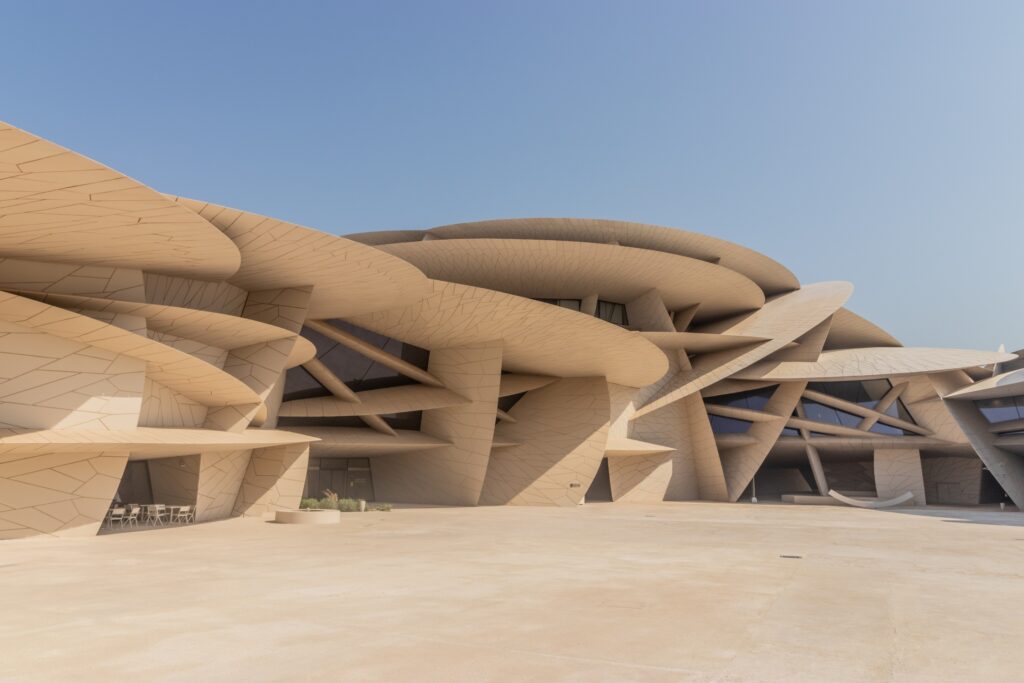
National Museum of Qatar
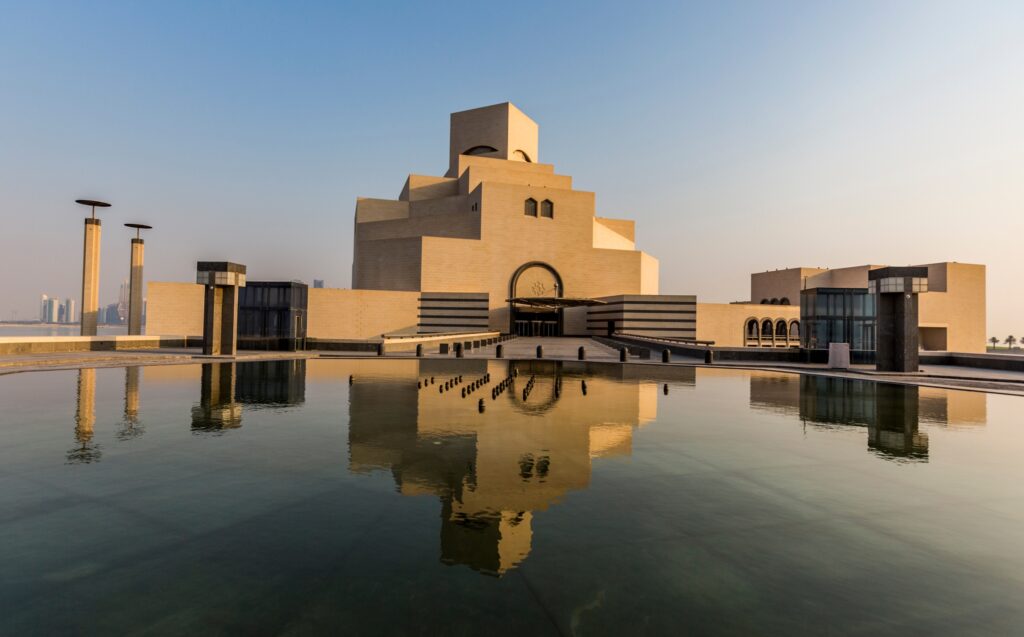
Museum of Islamic Art
Local memory first, global map next
Before Qatar’s cultural ambitions eyed overseas pastures, the 1975 museum anchored them home, giving the nation’s history and heritage a public institution – and public weight to match. In 2025, the National Museum marked fifty years since that first institution opened.⁴
By the 1990s, another layer was taking shape, with a collection of modern and contemporary art from and beyond the Arab world that would eventually provide the foundation for Mathaf: Arab Museum of Modern Art. Today, the collection counts over 9,000 works. ⁵
At the same time, Qatar was investing in the people who would shape, teach, study, and interpret culture. VCUarts Qatar was established with Qatar Foundation in 1998 and became the first university in the Gulf to offer accredited Bachelor and Master of Fine Arts degrees.⁶
Far from siloed and isolated efforts, these developments signaled a cultural ecosystem taking shape. This ecosystem certainly needed collectors, but more importantly, artists, historians, designers, conservators, curators, and audiences. By the turn of the century, Qatar was beginning to build both sides of that equation.
An institutional home for collections
Throughout the mid-2000s, Qatar’s collecting ambitions were beginning to acquire institutional form. Qatar Museums was established in 2005. Three years later came a defining moment with the opening of the Museum of Islamic Art in I.M. Pei’s landmark building on Doha’s Corniche. Today, the museum’s collection spans some 1,400 years and three continents, encompassing manuscripts, ceramics, textiles, and objects from across the Islamic world.⁷ Mathaf followed in 2010, turning a collection that had begun privately in the early 1990s into a public institution focused on modern and contemporary Arab art.⁸ Its collection is jointly held by Qatar Museums and Qatar Foundation.
By then, culture was also beginning to operate beyond the museum itself. Qatar Museums launched Years of Culture in 2012, beginning with Qatar-Japan and then building annual programs with countries and regions including the UK, Brazil, Türkiye, China, Germany, Russia, India, France, the United States, Indonesia, and Morocco.⁹ A year later, Al Zubarah Archaeological Site was inscribed on UNESCO’s World Heritage List, bringing international recognition to the preservation of Qatar’s archaeological heritage as well.¹⁰
National heritage, Islamic civilization, modern Arab art, archaeology, and international exchange were no longer separate pursuits for Qatar’s cultural custodians. Slowly and strategically, they had become parts of the same ecosystem.
A makers’ market
The most significant shift in the following decade was from collecting and exhibiting culture to producing it. The year 2015 marked the reopening of the Fire Station reopened after Qatar Museums repurposed the former Civil Defense headquarters into studios, galleries, and an artist residency hub. Beyond simply giving room for exhibitions, the residency program was designed to give artists production support, curatorial guidance, and mentorship.¹¹
Qatar National Library added another dimension when its new Education City building formally opened in 2018.¹² Alongside its role as a public and research library, it became custodian of documentary heritage including manuscripts, maps, photographs, and historical material. Then, in 2019, the National Museum of Qatar reopened in Jean Nouvel’s vast desert rose-inspired structure, literally building the new museum around the restored palace where the story had begun in 1975.
By the early 2020s, the infrastructure was becoming more specialized. M7, dedicated to fashion, design and creative entrepreneurship, opened in 2021.¹³ Tasweer Photo Festival was launched that same year to develop photographic practice across Qatar and the wider West Asia and North Africa region.¹⁴ An entire landscape had shaped up for Qatar to create cultural capital as successfully as it had preserved and collected it.
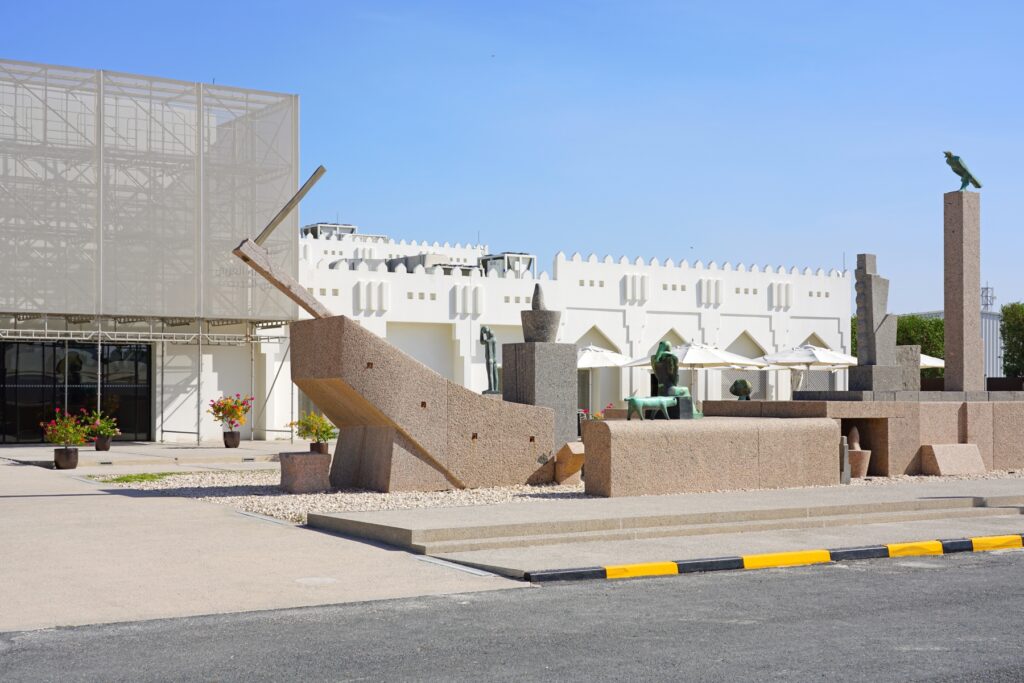
Mathaf: Arab Museum of Modern Art
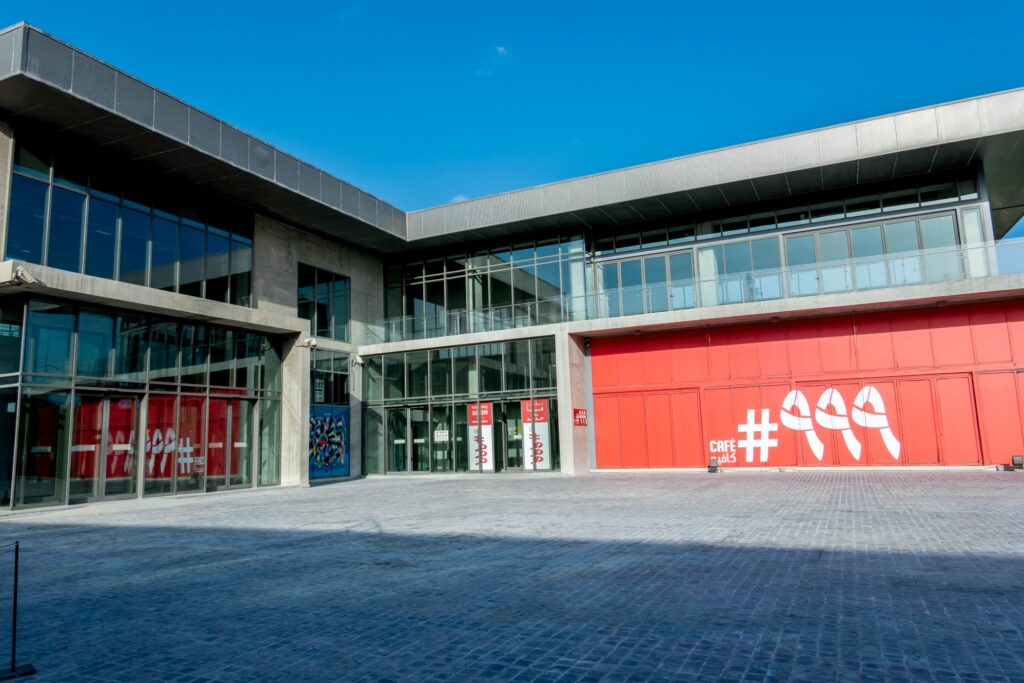
Doha Fire Station
Culture left the building
At the same time, Qatar has been steadily eroding the boundaries between cultural venues and the city around them. Ahead of the FIFA World Cup Qatar 2022, Qatar Museums installed over 100 public artworks across the country, from Hamad International Airport and Souq Waqif to landscapes near northern heritage sites such as Al Zubarah.¹⁵
The 3-2-1 Qatar Olympic and Sports Museum also opened in 2022, bringing another category of material culture into the museum landscape and linking sporting history, objects, and collective memory.¹⁶
Design Doha pushed the ecosystem in another direction in 2024. Its first biennial showcased over 100 designers from the MENA region across exhibitions, commissions, awards, and industry programming, while connecting institutions including M7, Liwan, VCUarts Qatar and Msheireb.¹⁷
The vision becomes clearer when these initiatives are read together. What began with the preservation of heritage had expanded into education, artistic production, photography, design, public space, and creative entrepreneurship.
Today, a market
The arrival of Art Basel Qatar in February 2026 was certainly a prestigious achievement. Its strategic significance, however, was in introducing a major international commercial platform into a cultural landscape that already had museums, collections, schools, residencies, festivals, public art, and decades of institutional investment behind it. The inaugural edition brought together 87 galleries from 31 countries and territories, presenting 84 artists. Over 17,000 people attended, while representatives of over 85 museums and foundations were present.
These numbers reflect not only scale, but room for exposure and circulation. Artists need routes from experimentation to representation and collecting, galleries need audiences, collectors need access, and institutions need exchange. Works themselves need to travel between studios, exhibitions, fairs, collections, and museums.
And Qatar is continuing to add both depth and breadth. The second Design Doha opens in November 2026, while the inaugural Rubaiya Qatar follows later that month as a multi-site contemporary art quadrennial spanning exhibitions, commissions, performances, residencies, and public art.¹⁸
Beyond those sit institutions whose collections and ambitions are already taking shape before their doors have opened. The Art Mill Museum is scheduled for 2030, built around an international modern and contemporary collection that has been assembled over approximately four decades. ¹⁹ Dadu, Children’s Museum of Qatar, the Lusail Museum and Qatar Auto Museum are also under development.
Qatar has spent five decades deciding what deserves to be remembered, collected, created, and shared. Its cultural ecosystem is still growing. And as that legacy passes from one exhibition, institution, collection, and generation to the next, safeguarding what has taken decades to build becomes part of building it well.
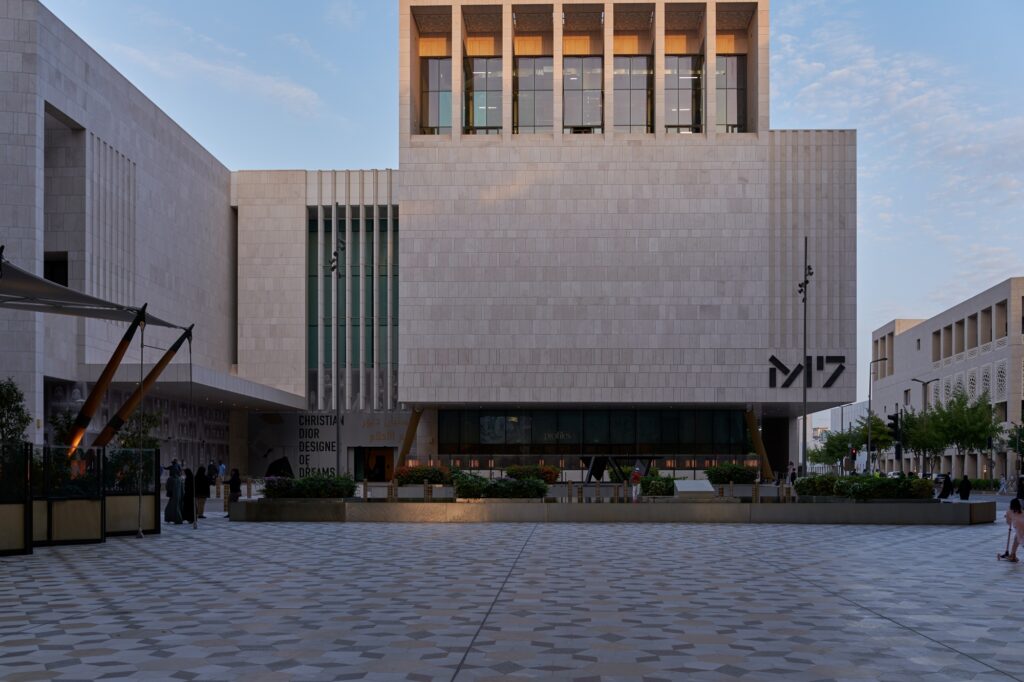
M7
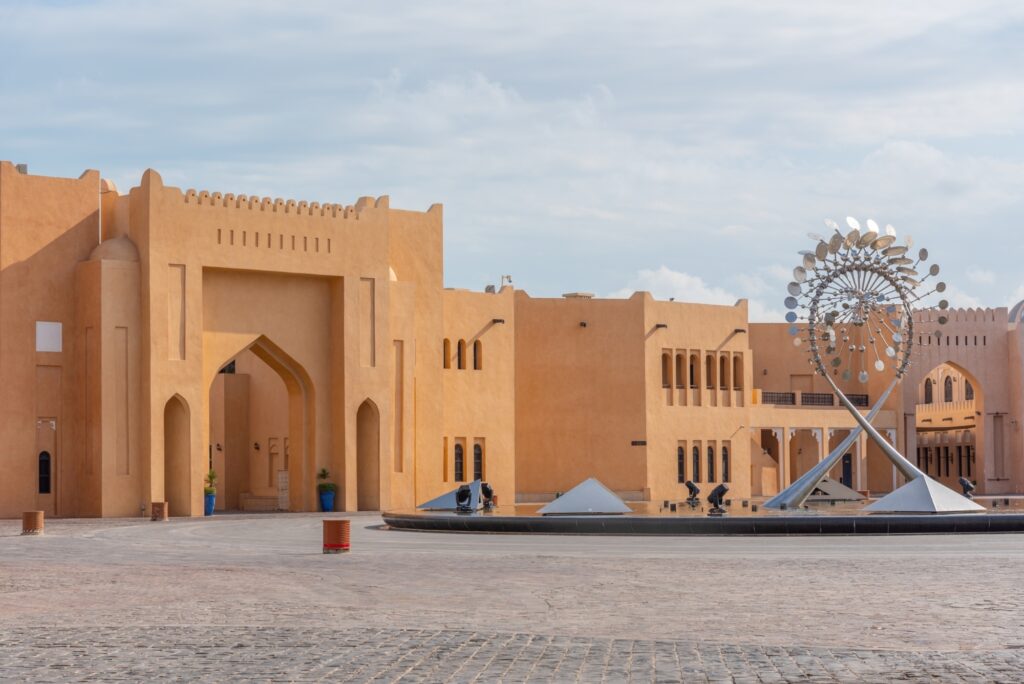
Katara Cultural Village
¹ Qatar Museums, The Old Palace at NMOQ, Accessed in September 2026
² Qatar Museums, The Old Palace at NMOQ, Accessed in September 2026
³ Art Basel, Art Basel to stage new fair for Modern and contemporary art in Qatar, 2026
⁴ Qatar Museums, National Museum of Qatar Marks 50 Years of Cultural Preservation and Innovation, 2025
⁵ Mathaf, About us, Accessed September 2026
⁶ VCU Arts, About VCU Arts, Accessed September 2026
⁷ Museum of Islamic Art, Highlights, Accessed September 2026
⁸ Mathaf, About us, Accessed September 2026
⁹ Years of Culture website, A legacy of greater understanding and worldwide friendships, Accessed September 2026
¹⁰ UNESCO World Heritage Convention, Qatar, Accessed September 2026
¹¹ Qatar Museums, Now and then: Fire Station, From Civil Defence to Creative Space, 2026
¹² Qatar National Library, About the Library, Accessed September 2026
¹³ Qatar Museums, QATAR MUSEUMS TO LAUNCH ANNIVERSARY SEASON BEGINNING 23 OCTOBER WITH 16 EXHIBITIONS AND EVENTS ACROSS ITS FULL RANGE OF INSTITUTIONS, 2025
¹⁴ Qatar Museums, Her Excellency Sheikha Al Mayassa bint Hamad bin Khalifa Al Thani Unveils the Third Edition of Tasweer Photo Festival Qatar, 2025
¹⁵ Qatar Museums, Qatar Museums Unveils Site-specific Public Artworks by Olafur Eliasson, Simone Fattal and Ernesto Neto Near Nation’s Northern Heritage Sites, 2022
¹⁶ Qatar Museums, QATAR MUSEUMS TO LAUNCH ANNIVERSARY SEASON BEGINNING 23 OCTOBER WITH 16 EXHIBITIONS AND EVENTS ACROSS ITS FULL RANGE OF INSTITUTIONS, 2025
¹⁷ Qatar Museums, Qatar Museums Unveils Line-Up of Designers and Exhibitions for Inaugural Edition of Design Doha, 2024
¹⁸ Qatar Museums, Fall 2026 Exhibitions: Your Culture Calendar Starts Here, 2026
¹⁹ Qatar Museums, Art Mill Museum overview, Accessed September 2026