

Portrait of Katia Nounou Boueiz, Chairman Sotheby’s Middle East.
The Middle East was once approached by the art world as a source of compelling cultural narratives and transactional potential. Today, its collectors and cultural community are shaping the conversation themselves, moving beyond interest towards informed insight, and building collections through scholarship, patience, and conviction. In this conversation, Katia Nounou Boueiz, Chairman of Sotheby’s Middle East, reflects on a market looking past momentum towards context, stewardship, and cultural responsibility – and at that, works with the depth to endure across generations.
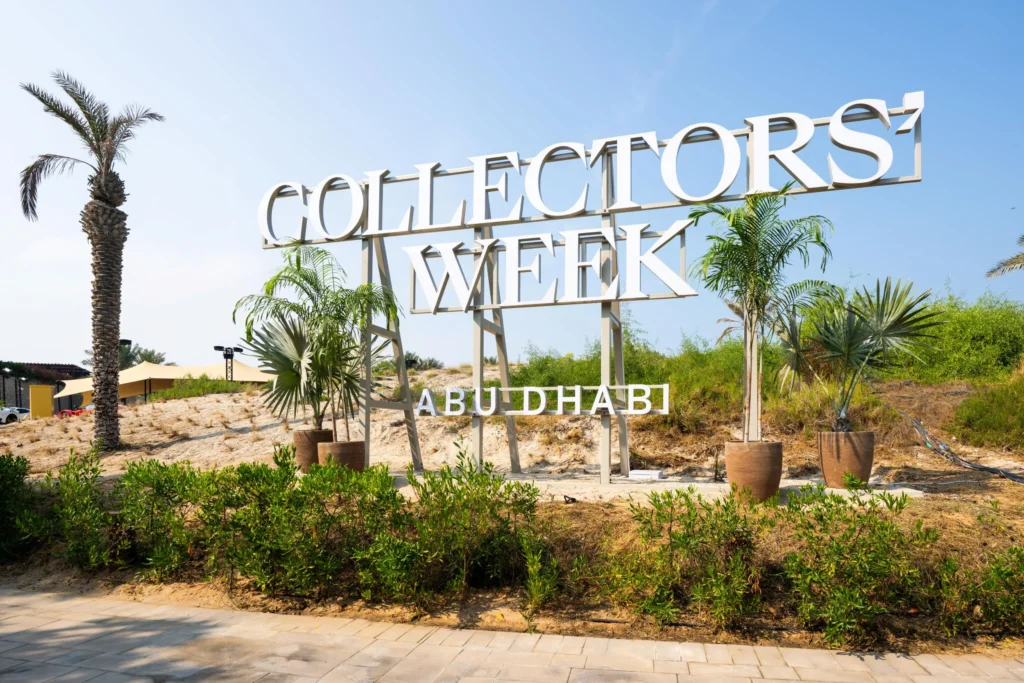
Sotheby’s Collectors’ Week in Abu Dhabi with ADIO, $1bn of luxury and art on display before $150 million worth of luxury items are auctioned live on 5 December. Image courtesy Sotheby’s.

Sotheby’s Collectors’ Week in Abu Dhabi with ADIO, $1bn of luxury and art on display before $150 million worth of luxury items are auctioned live on 5 December. Image courtesy Sotheby’s.
Having observed the Middle East’s art market over several decades, what developments do you consider truly transformative? Are we witnessing the maturation of a market, or the emergence of an entirely new collecting paradigm?
I believe we are witnessing both.
When I first began working in the Middle East nearly two decades ago, the region was still largely perceived as an emerging market. Collectors were exceptionally sophisticated, but the supporting ecosystem: museums, galleries, auction houses and cultural infrastructure, was still taking shape.
Today, that landscape has fundamentally changed. The Middle East is no longer simply participating in the global art market; it is increasingly helping to shape it.
What has been truly transformative is the long-term commitment to culture we have seen across the region. Governments, institutions and private patrons have invested not only in buildings and collections, but in education, scholarship and creating a sustainable cultural ecosystem. Art is no longer viewed as a luxury alone, it has become part of a broader national vision.
Equally significant is the evolution of the collector. Today’s Middle Eastern collectors are among the most internationally engaged anywhere in the world. They buy across continents, periods and categories while simultaneously supporting and championing artists from their own region.
Today’s collectors have access to more information, more markets, and more categories than ever before. Has this abundance made collecting more discerning, or simply more complex?
In many ways, it has done both.
Information has democratized access to the art world. Collectors today can research artists, compare prices, visit exhibitions virtually and follow museum acquisitions from anywhere in the world.
But information alone doesn’t create knowledge.
In fact, the abundance of information has made trusted advice more valuable than ever. Today’s collectors are looking for context rather than simply data. They want to understand why a work matters historically, how it fits within an artist’s career and where it sits within broader cultural conversations.
The strongest collections are rarely built by following trends. They are built through patience, scholarship and relationships.
Technology has accelerated access, but discernment still comes from experience.
For many years, artists from the Arab world were often discussed through the lens of geography rather than art history. Do you feel that is beginning to change, both institutionally and within the market?
Absolutely, and I think it is one of the most encouraging developments we are seeing.
For many years, artists from the region were often presented within regional or national narratives. While those contexts remain important, they can sometimes overshadow the universal artistic significance of the work itself.
Increasingly, institutions and collectors are integrating Arab artists into broader art historical narratives rather than treating them as separate categories.
That is an important shift.
An artist should ultimately be understood through the quality of their work, their innovation and their influence, not simply where they were born.
As museum acquisitions become more global, I believe we will continue to see Arab artists assume their rightful place within international art history.
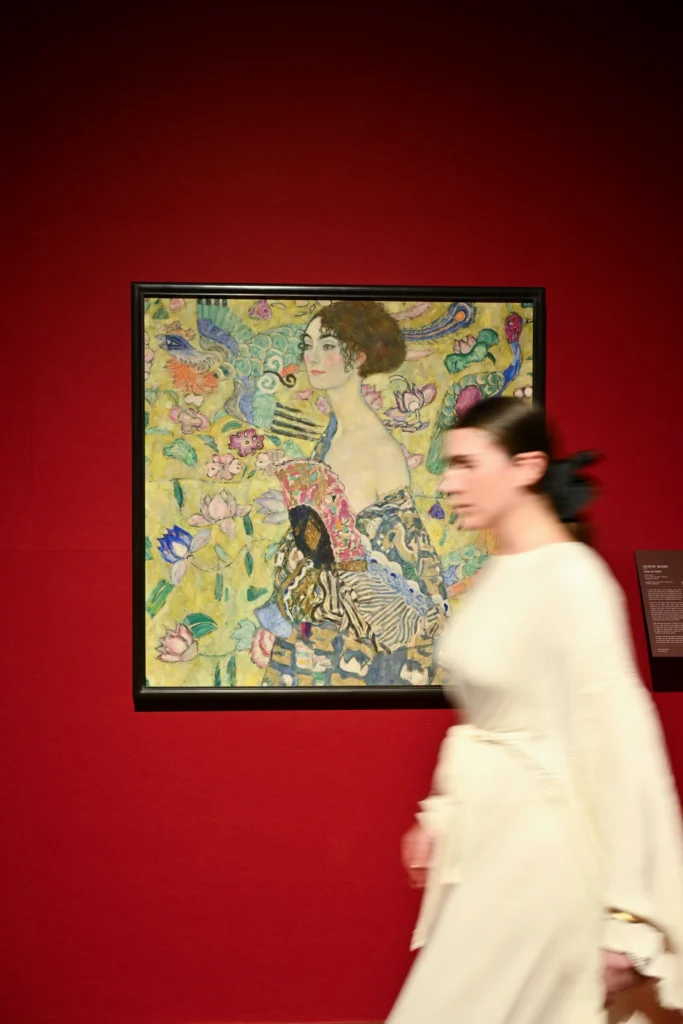
Sotheby’s Collectors’ Week in Abu Dhabi with ADIO, $1bn of luxury and art on display before $150 million worth of luxury items are auctioned live on 5 December. Image courtesy Sotheby’s.
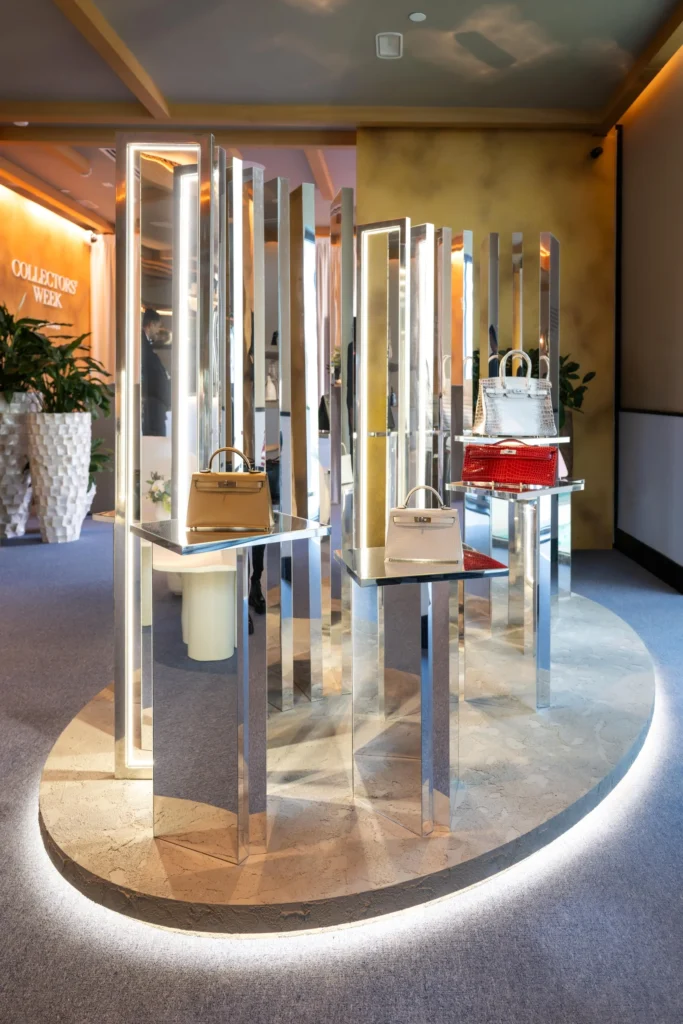
Sotheby’s Collectors’ Week in Abu Dhabi with ADIO, $1bn of luxury and art on display before $150 million worth of luxury items are auctioned live on 5 December. Image courtesy Sotheby’s.
Over the past few years, what assumptions about the art market have proven wrong? Have there been developments that surprised even the most seasoned observers?
One assumption that has consistently proven wrong is that uncertainty weakens the art market.
History shows us the opposite.
Periods of economic or geopolitical uncertainty often reinforce the importance of exceptional works of art. Truly rare masterpieces remain remarkably resilient because they represent cultural significance, scarcity and long-term value.
Another surprise has been the increasing internationalisation of collecting.
Today’s collectors move effortlessly between categories, continents and cultures. A client who collects Impressionist paintings may also acquire contemporary design, watches, jewellery or digital works.
The boundaries that once defined collecting are becoming increasingly fluid.
Auction records tend to capture public attention, but they do not always tell the full story of the market. Is there a recent auction result that you found particularly revealing, and what did it tell you about the direction of collecting today?
Auction records make headlines, but they are only one measure of a healthy market.
What I find more revealing are moments when collectors compete for works because of their historical importance rather than their commercial momentum.
Those sales demonstrate that scholarship continues to drive demand.
Increasingly, we are seeing collectors prepared to wait years for the right work rather than buying simply because something is available.
That patience reflects a more mature market.
Great collections are not built quickly.
The recent debate around AI-generated art at auction raised urgent questions around authorship, intellectual property, and creative custodianship. How do you reckon market players can and should address artist concerns on AI art while still engaging with technological change?
Every major technological shift has challenged established ideas of creativity.
Photography, Video, Digital art.
AI presents another important chapter, but it should not be viewed simply as a threat. The conversation ultimately comes back to transparency.
Collectors deserve to understand how a work has been created, what role technology has played and where authorship resides.
Technology should expand artistic possibilities, not diminish the rights of artists.
As an industry, our responsibility is to embrace innovation while protecting originality, intellectual property and artistic integrity.
Those principles remain timeless regardless of the medium.

Richard Mille, Nadal RM35-03 watch, sold for $486,400 USD (est. $350,000 – 600,000) Sotheby’s Abu Dhabi Collectors’ Edit-Materiality Auction, June 23-10 July. Image courtesy of Sotheby’s.
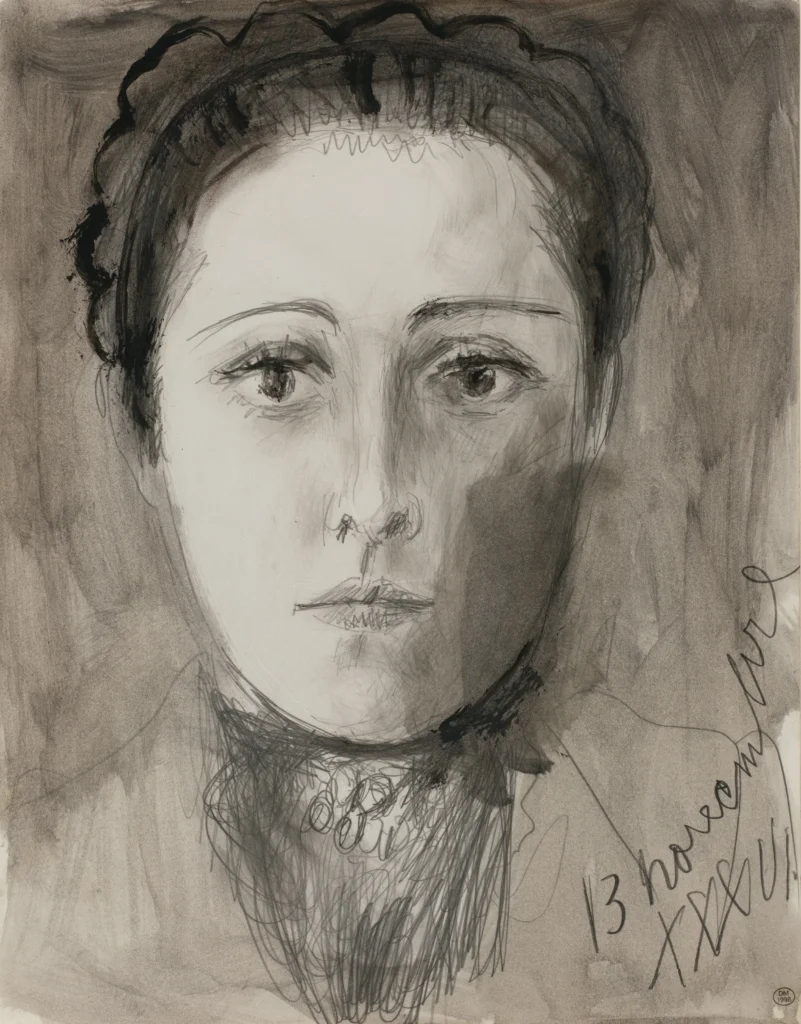
Pablo Picasso, Portrait de Dora Maar (Dora Maar à la coiffe), sold for £1.28m (est. £600,000 – 800,000). Image courtesy Sotheby’s.
The Middle East is increasingly shaping cultural conversations on a global scale, not only through institutions and exhibitions, but also through private patronage. Do you believe collectors today have a different role to play in shaping cultural narratives than they did a generation ago?
Without question.
Today’s collectors are no longer simply acquiring works—they are helping shape cultural history.
Many support museums, fund exhibitions, commission artists, establish foundations and make important works publicly accessible.
Their role has evolved from ownership to stewardship.
Some of the most significant cultural initiatives we see today would not exist without visionary private patrons working alongside public institutions.
That partnership is becoming increasingly important.
The distinction between art and luxury has become increasingly fluid. As collectors move seamlessly between contemporary art, design, jewelry, watches, rare automobiles, and other categories, how is the very notion of collecting being redefined?
I think collectors today are becoming cultural collectors rather than category collectors.
They are building collections that reflect personal identity rather than departmental boundaries.
A Jean Prouvé chair, a Richard Mille watch, a Picasso drawing and an exceptional vintage Ferrari can all coexist because they share common qualities: craftsmanship, rarity, innovation and enduring design.
This broader approach makes collecting more personal and ultimately more interesting.
People are collecting stories and ideas as much as objects.
As collections become increasingly sophisticated—and often represent significant concentrations of both cultural and financial value—questions of stewardship have moved to the forefront. How have conversations around conservation, insurance, risk management, succession planning, and the long-term care of collections evolved among today’s collectors?
Today’s collectors increasingly think like custodians rather than owners.
As collections grow in significance, the conversation naturally expands beyond acquisition.
Collectors are thinking about conservation, digital documentation, insurance, governance and succession planning from much earlier stages.
The most sophisticated collectors recognise that preserving a collection is every bit as important as building one.
A great collection should outlive its original owner.
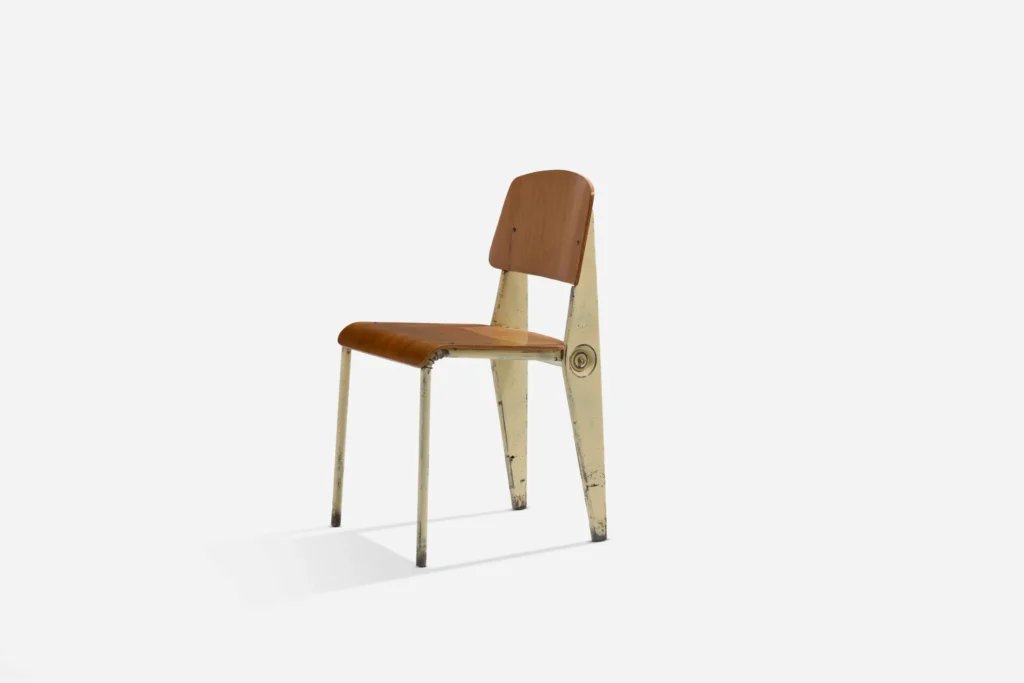
Lot 330, Jean Prouvé, Demountable Chair, sold for $61,440 USD (est. $18,000 – 24,000).
Image courtesy Sotheby’s.

René Magritte, L’empire des lumières, 1961, sold for £59.42m. Image courtesy Sotheby’s.
At what point does a collection stop being a private passion and become a legacy that needs to be professionally managed?
I don’t think there is a specific monetary threshold.
It happens when a collection begins to carry cultural responsibility.
Once a collection contributes to scholarship, inspires future generations or represents an important chapter of artistic history, it becomes something larger than the individual collector.
At that stage, professional management is not simply sensible but it becomes essential.
Throughout your career, you have advised collectors at every stage of their journey. In your view, what distinguishes a collection that acquires lasting significance from one that is merely responsive to the market of the moment?
Taste evolves. But collections that endure are driven by curiosity, intellectual discipline and genuine passion.
The collectors I most admire are those who buy because they believe in the work, not because everyone else does.
Over time, authenticity almost always proves more valuable than trend
The art market is ultimately shaped by stories as much as by transactions. Looking back, is there a particular work, collection, or auction moment that remains especially memorable to you, and what did it reveal about the deeper motivations that drive people to collect?
One of the most unforgettable moments of my career was bidding on René Magritte’s L’Empire des lumières, which ultimately sold for more than US$70 million. It was an extraordinary auction, marked by an intense eight-minute bidding battle between my client and another bidder on the telephone. The atmosphere was electric, every bid heightened the anticipation, and you could feel the significance of the moment throughout the room.
What has stayed with me ever since is not the final price, but what it revealed about the nature of collecting. When a work of exceptional rarity, beauty and art historical importance comes to market, collectors are willing to go to extraordinary lengths to acquire it. Opportunities to own such masterpieces are incredibly rare, and they know they may never have another chance.