
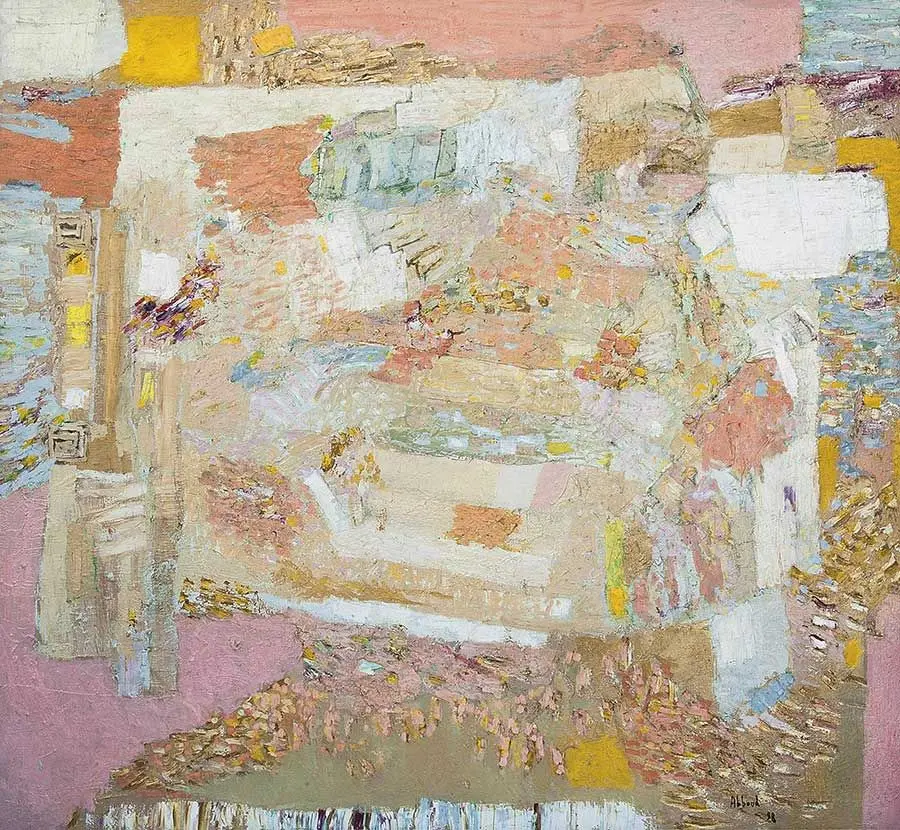
Shortly before Shafic Abboud’s passing in Paris in 2004, Claude Lemand – the gallerist, publisher and curator who had exhibited him throughout his final years – made the artist a double promise. He would publish Abboud’s first monograph, which appeared in 2006, and organize the most important retrospective of his work in France, eventually held at the Institut du monde arabe in 2011.
Where that second promise was delivered is particularly apt. Abboud had left Lebanon for Paris at twenty, returned repeatedly without ever resettling permanently, and became a French citizen. He built an artistic life deeply embedded in the École de Paris, but remained rooted in the landscapes, stories, rituals and light of Mount Lebanon. Lemand would later call him “the most French painter in the Arab world”.
Abboud never really wanted to solve that contradiction, probably because it had been there from the start. Born in Mhaidsé in 1926, he grew up with a grandmother who told village stories, a grandfather who was both farmer and poet-illustrator, Melkite iconography, tree houses, and the light of the Lebanese mountains. He would later call these memories “the years of the bird”.
At fifteen, an encounter with César Gemayel fueled the artistic compulsion that was already there, away from his engineering studies. Abboud later recalled that painting consumed him until almost everything else became indifferent.
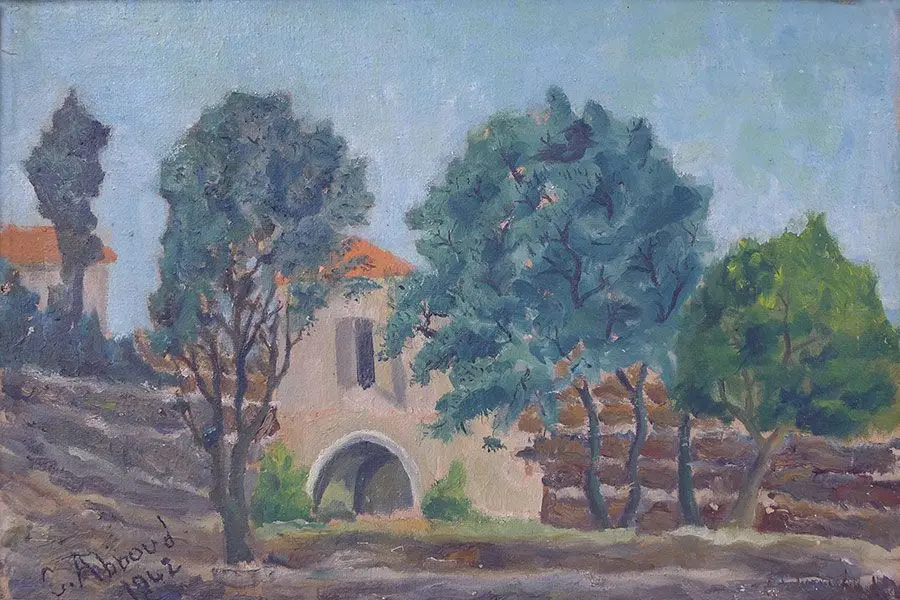
Shafic Abboud, La Maison Dans Les Pins, 1942, 30 x 45 cm, Oil on Panel.
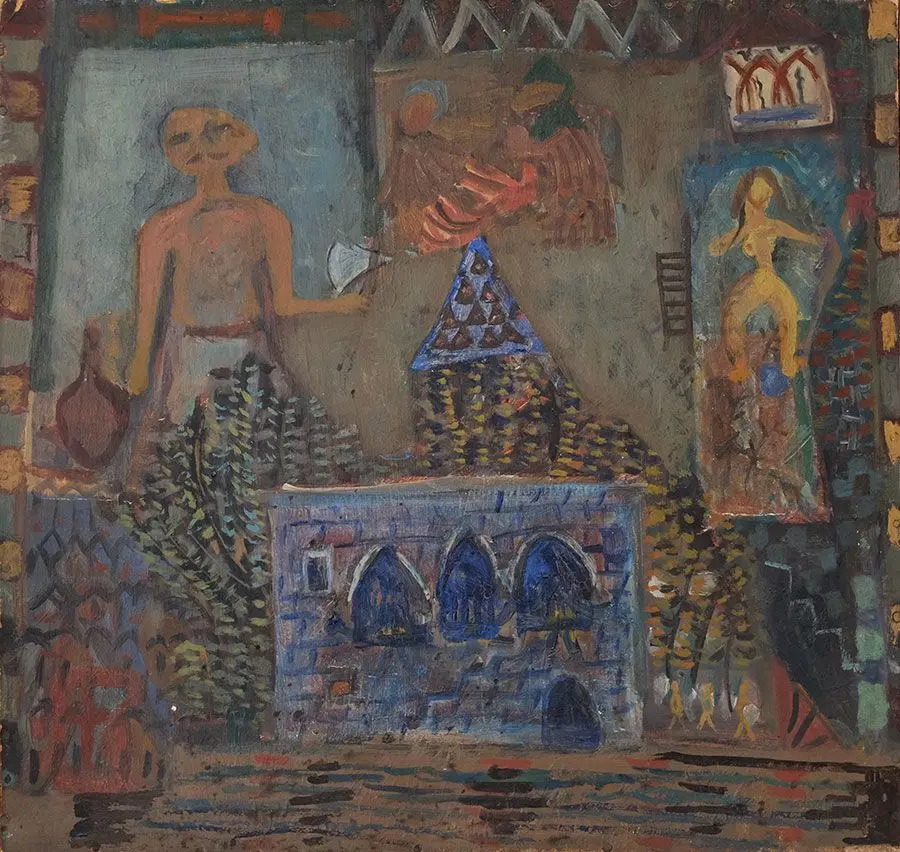
Shafic Abboud, Le Grand-Père, 1948, 53 x 55 cm, Oil on Panel.
The early paintings already show some of the contradictions that would stay with him. In La Maison dans les pins (1942), the world is still recognizably landscape. By Le Grand-père (1948), architecture, bodies, pattern and small icon-like forms crowd the same visual space. In Le Bain d’Em Naaman (1948), the bodily and the spiritual seem perfectly capable of sharing the same room.
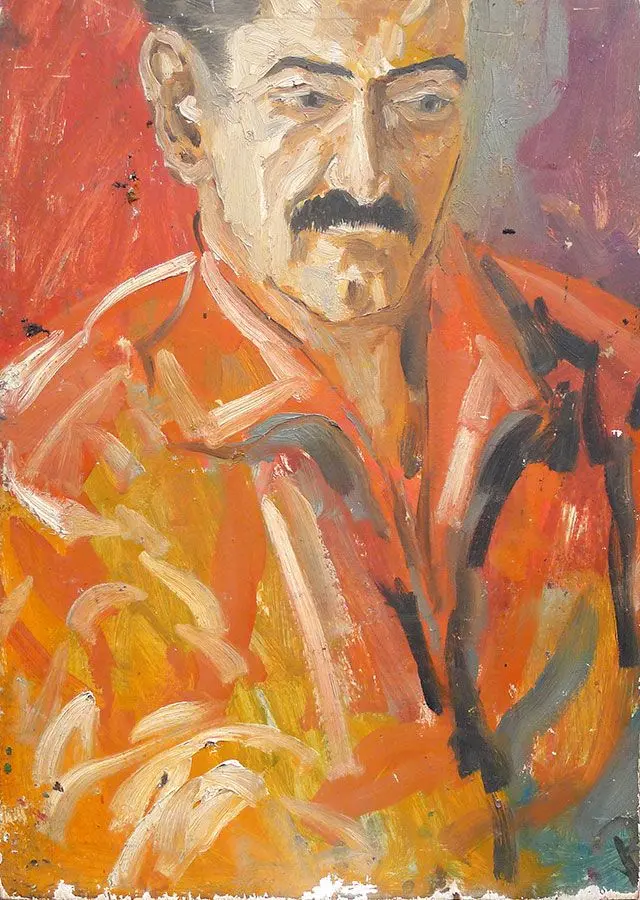
His 1947 Autoportrait is just as revealing. Abboud gives himself vivid color and physical presence. Yet his gaze remains slightly withdrawn. Across the next half-century, his confidence would often coexist with his relentless doubt, in art as in life.
His daughter, Christine, described him as someone who was “always tormented and in a search state”. He disliked the idea of himself as a successful artist, despite knowing the quality of what he was making. There was little ego – and certainly, even less complacency – in that recognition.
Paris gave his restlessness ample room to roam. Abboud moved through the ateliers of André Lhote, Jean Metzinger, Othon Friesz and Fernand Léger, studied drawing and engraving at the École des Beaux-Arts, and encountered works of painters including Pierre Bonnard, Nicolas de Staël and Roger Bissière.
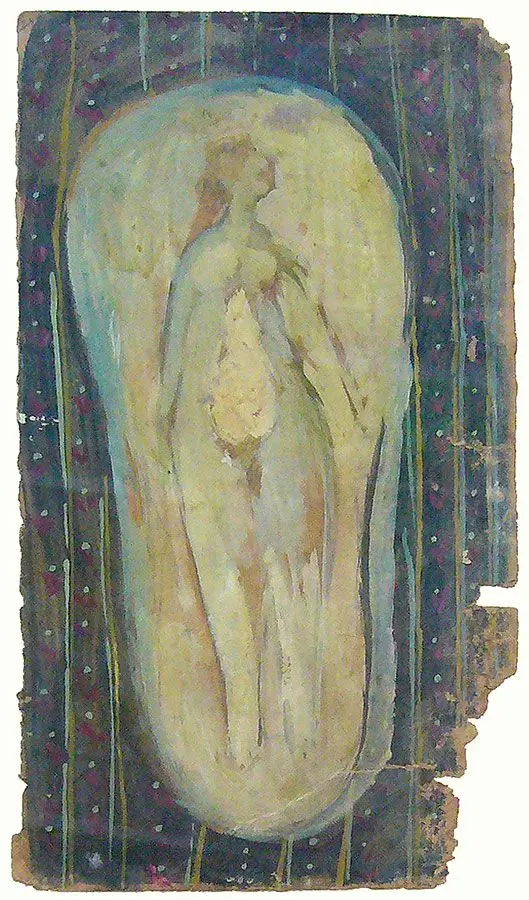
Shafic Abboud, Le Bain d’Em Naaman, 1948, 31 x 17 cm, Varnished Gouache on Paper.
Shafic Abboud, Autoportrait, 1947, 55 x 38 cm, Oil on Panel.
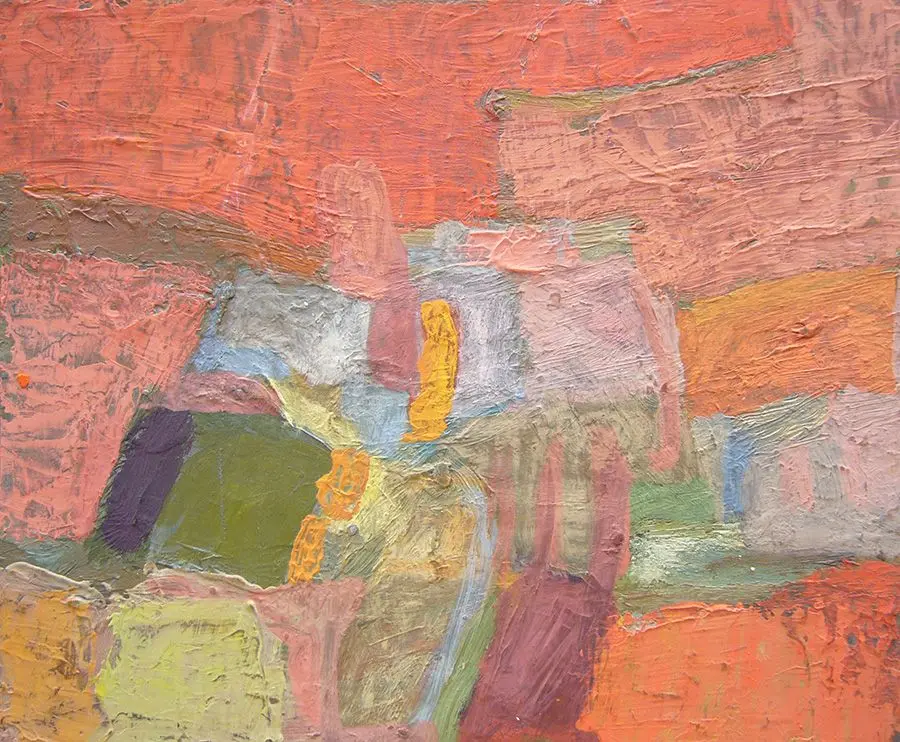
His painting became increasingly abstract during the 1950s, a transition he described with utmost simplicity: it began when he no longer felt the need to put eyes on a face. By Christine’s own account, her father borrowed from either abstraction and figuration whenever the painting required it.
This duality is most obvious in chronological order. The compact structures of Abboud’s 1950s abstractions loosen during the following decade; color begins to breathe differently, forms soften, and recognizable things can surface before disappearing again.
By the 1970s, Abboud appears to have found a language spacious enough to contain several languages at once. Le Pays chaud (1970) is one example. A huge turquoise blue field dominates, while color gathers feverishly around its edges. In his other works of that decade, cubism, lyrical abstraction, and fragments of figuration all become part of his artistic identity.
This plurality mirrors Abboud himself. He obtained his French nationality in 1969 but continued teaching part of each year in Beirut until 1975. He lived in France and was fully immersed in its artistic culture, yet Lebanon remained indispensable to him.
Christine later described her father’s relationship to Lebanon in poignant terms; he “absolutely needed to go”, and just as urgently, needed to leave. He needed France, Lebanon, his friends in Beirut, and the physical distance that allowed memory to work upon them. His Orient, she has said, was inevitably an “Occidental Orient” – one of exile, changed rather than preserved by the years spent elsewhere.
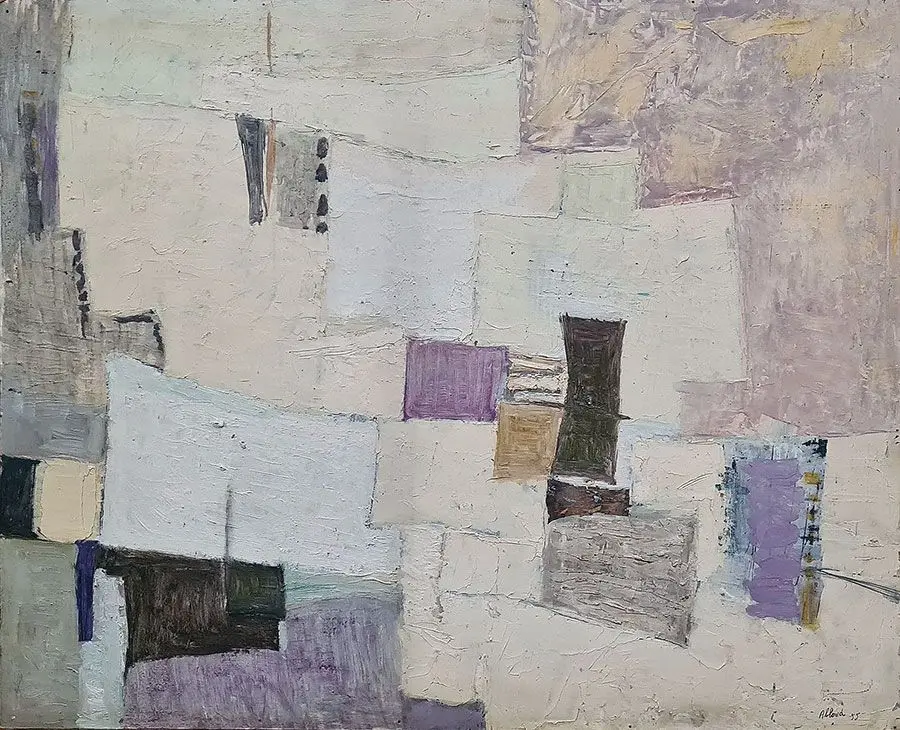
Shafic Abboud, Composition, 1955, 54 x 65 cm, Oil and Tempera on Cardboard.
Shafic Abboud, Composition, 1957, 22 x 27 cm, Oil on Paper.
Far from nostalgic scenery, Abboud’s Lebanon was material: childhood landscapes, particular interiors, village stories, Byzantine Greco-Arabic imagery, fabrics, faces, bodies, food, light. Lemand argues that Abboud eventually reconciled this “enchanted” childhood world with the technical language he had acquired through Parisian painting. But even this reconciliation sounds a tad too peaceful for the friction he seems to have enjoyed.
Many of Abboud’s paintings appear to unabashedly celebrate hedonism. But, as Lemand notes, the paintings were also contained by a heightened awareness of human fragility. At the same time, Abboud’s childhood religious inheritance seems to have entered the work through grandeur rather than dogma. Whatever he painted on opposite sides of the spectrum, glory was the common language.
This apparent lightness, however, didn’t mean ease. Abboud, his daughter recounts, was affectionate but capable of vanishing mentally into his work. So attached was he to his craft that the prospect of selling a painting would leave him in “terrible states”.
The Civil War placed new pressure on Abboud’s state of mind and old relationship with Lebanon. He would spend years unable to return, and a decade compensating for this impossible return through his 1980s paintings. In the wake of tragedy, Abboud depicted the Lebanon he wanted to see. Les Cafés engloutis from 1990 grew from the destruction during the Lebanese war of Beirut’s seaside cafés – places Abboud had loved during his winter stays before 1975. Rather than documenting that loss, he rebuilt the landscape around it through color and memory.
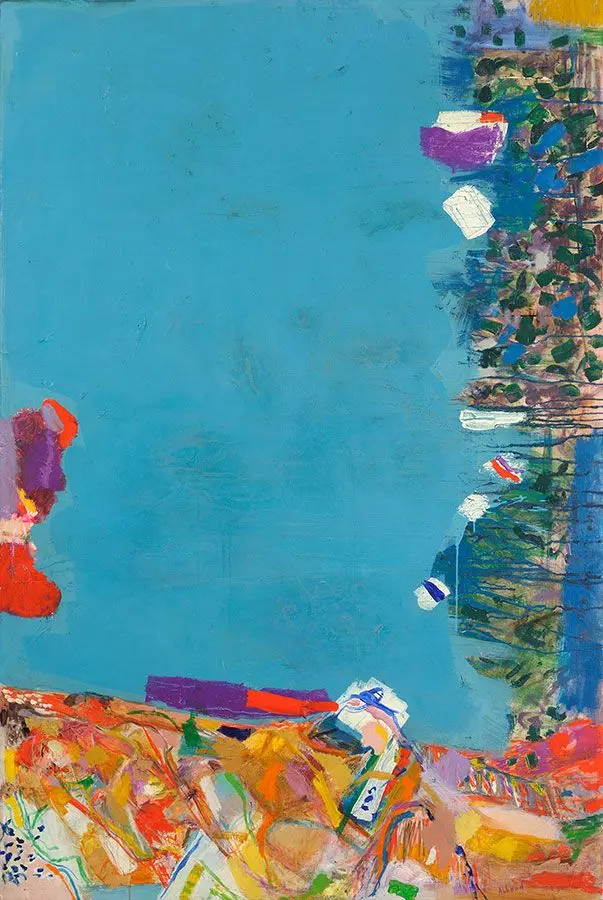
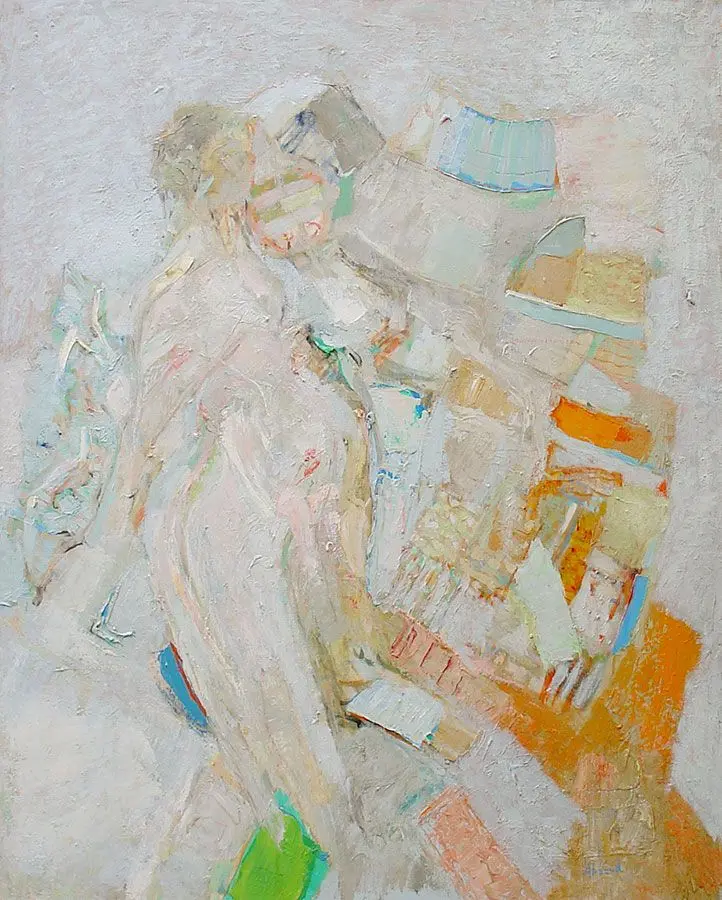
Shafic Abboud, Le Pays Chaud, 1970, 194 x 130 cm, Oil on Canvas.
Shafic Abboud, Déshabillage Printanier, 1979, 100 x 81 cm, Oil on Canvas.
And he could treat personal loss in much the same way. His Robes de Simone series in 1997 was a vivid ode to his long-term companion, Simone, whose dresses had fascinated him. Lemand reads this recurring tendency in Abboud’s paintings as a symbolic victory of art over death.
By his final years, his work seemed to be coming full circle. In Pénombre (Hommage à Bonnard), Abboud explicitly acknowledges Pierre Bonnard, whose color and sensibility had been present in his thinking since the early Paris years.
Even after a serious heart condition that started in the late 1990s, the need to paint continued through 2003. Toward the end of his life, Abboud asked his daughter to manage his studio. It was a big ask, but one that would lead her to discover exhibition archives, letters, classified files and personal collections he had carefully preserved. “As though he wanted his work to go on,” she wrote of what she found in the studio’s organized chaos.
Perhaps that is also why the double promise Claude Lemand made shortly before Abboud’s passing feels so resonant. The first monograph gave structure to a career the artist had spent continually questioning. The retrospective placed an artist formed between Lebanon and France inside the Institut du monde arabe in Paris – a fitting space for someone who had resisted choosing one cultural identity over another.
Abboud passed away in Paris in 2004 and was buried in Mhaidsé. He was Lebanese and French, figurative and abstract, socially attached and solitary in temperament. Eventually, those contradictions stop looking like contradictions at all. They look like Abboud.
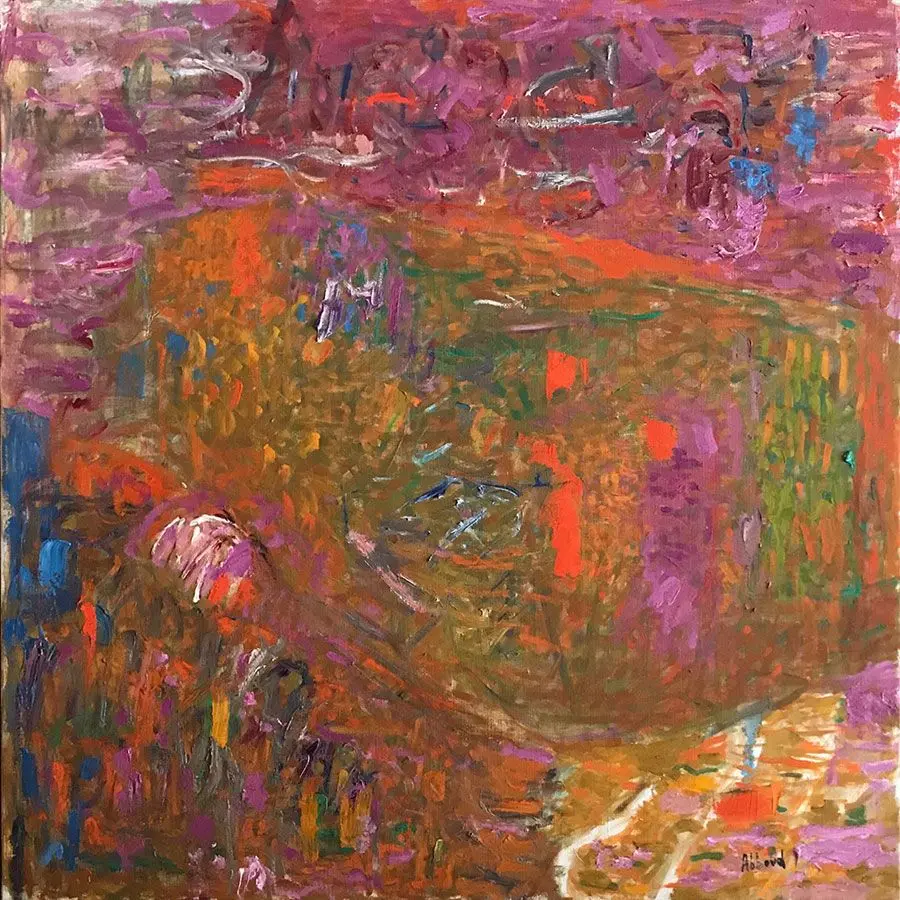
Shafic Abboud, Pénombre (Hommage à Bonnard), 2000, 80 x 80 cm, Oil on Canvas.
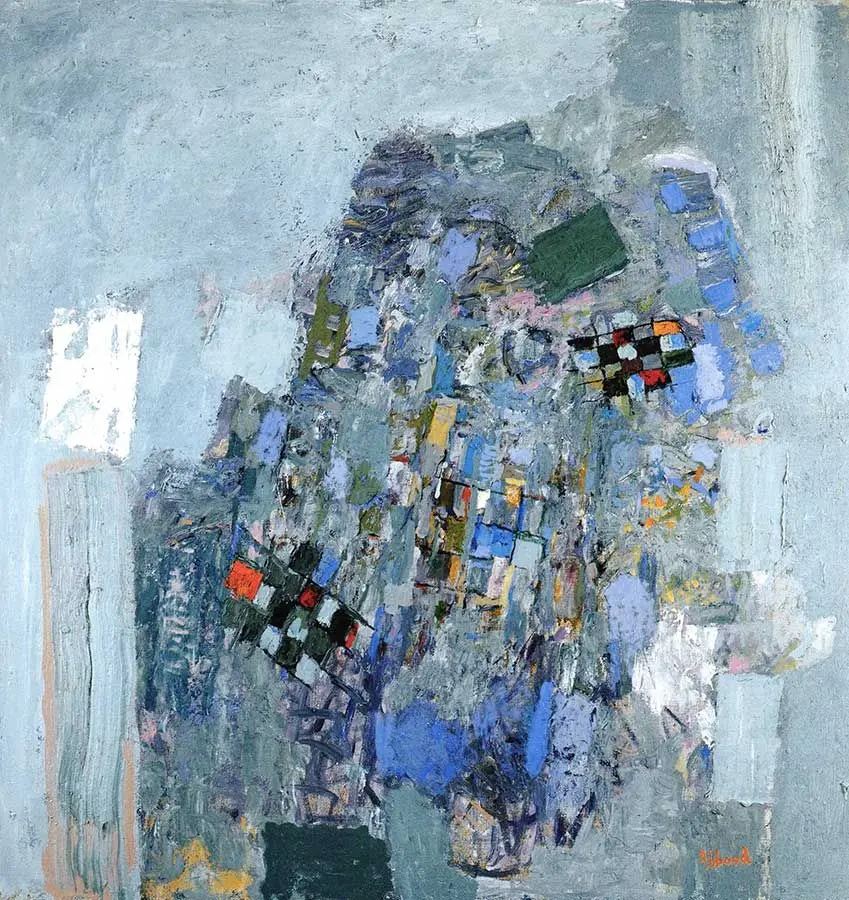
Shafic Abboud, Le Festin, 2002, 110 x 105 cm, Oil on Canvas.
All images courtesy of the Shafic Abboud Estate, via his official website.