
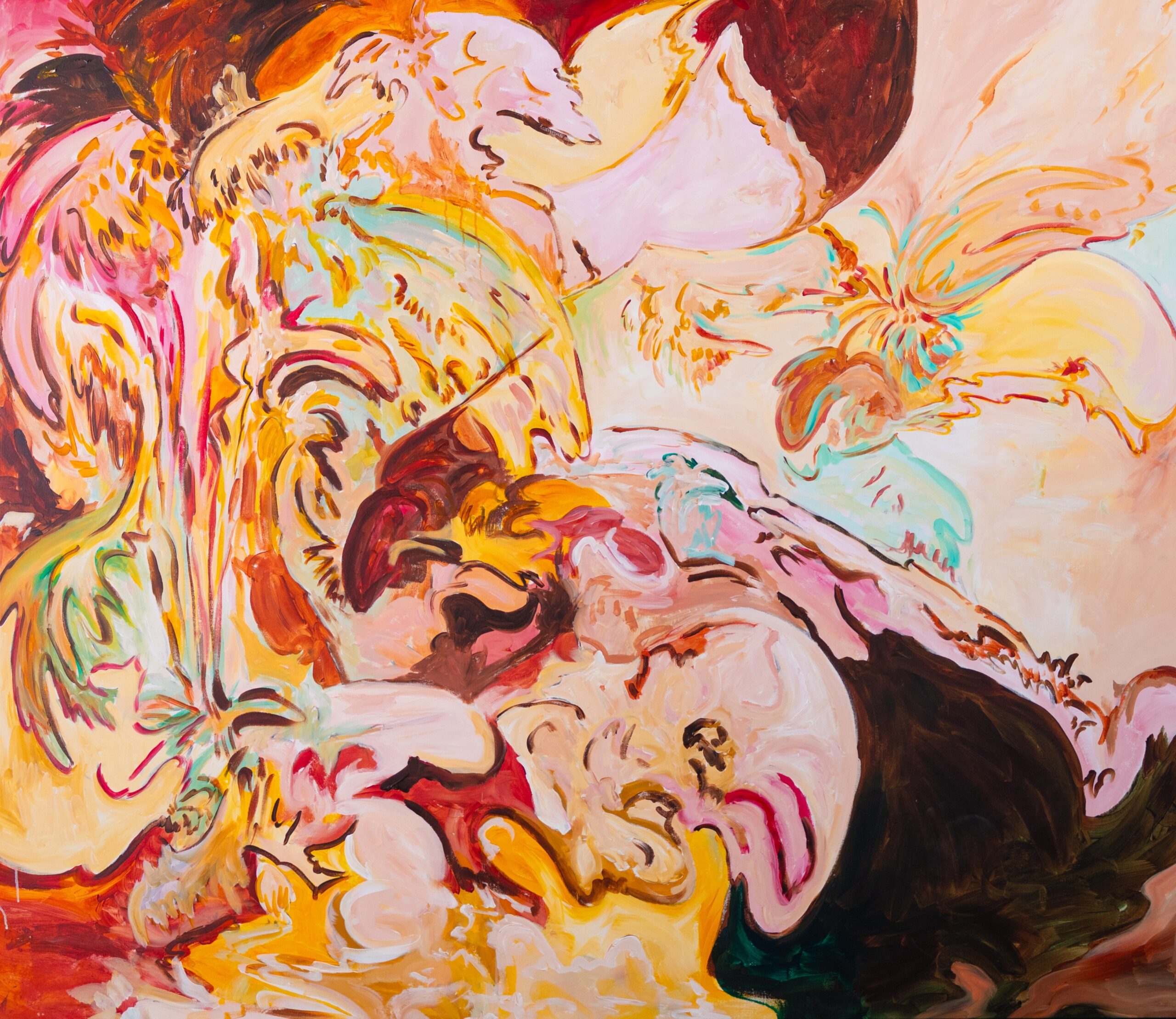
When Salmah Almansoori moved from Ghayathi to Abu Dhabi in 2019, the three-hour road between the two cities drew her attention to something strange. Each weekly return made her hometown look slightly less familiar, she told Sandy Times. Families were leaving some of its oldest houses. Buildings were being demolished. She found herself wondering where people had gone, what had happened inside those rooms, and why so little of the city’s development seemed to have been documented. Soon, she was journeying through Ghayathi with her phone, photographing old structures and collecting what others had left behind. Her mother called the growing stash in her storage room garbage. Almansoori preferred to think of it as “investing in the future.”
That instinct followed her across the border. On a 2024 road trip through Saudi Arabia with her uncle, she stopped in her tracks for a bright orange camping cushion abandoned in the Hafar Al-Batin desert. Who had sat on it, potentially discarded it, or perhaps entirely forgotten it were questions among many that have become an integral part of Almansoori’s creative process. Some of her later works would answer them, while others would simply ponder upon the possibilities.
In Ha’il, she entered a burned post office and photographed melted plastic telephones and charred papers – the hardware of conversations whose contents were already gone. Elsewhere, a once white chair in a palm farm had weathered into the colors of its surroundings. Almansoori seems captivated by this precise moment: when an object loses its owner and begins another life as landscape.
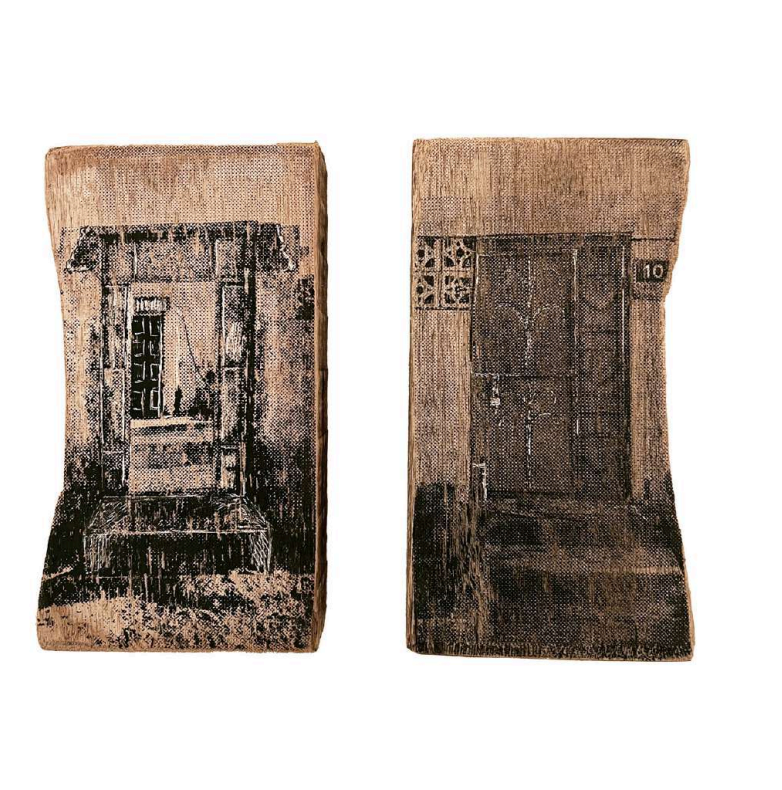
Salmah Almansoori, Doors, 2022, Screen Print and Ink on Found Objects, 24 x 12 x 4 cm each.
Image courtesy of the artist and Firetti Contemporary.
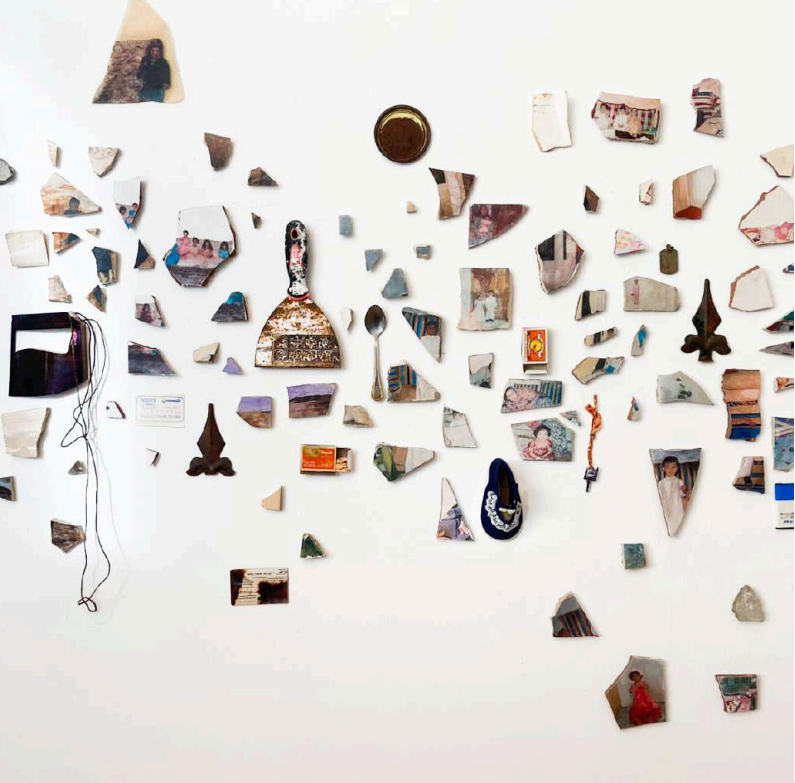
Salmah Almansoori, Who I Became, 2023, Photo Transfer, Acrylic and Oil Paint on Found Objects, Variable Dimensions. Image courtesy of the artist and Firetti Contemporary.
Her sensitivity to relics has a family history. Her grandfather was a Bedouin who moved between Saudi Arabia and the UAE and kept metal boxes filled with tools and mementoes. Her grandmother stored handbags, wallets, medical and identification cards, family photographs and other personal effects. Years later, Almansoori would incorporate her grandfather’s spoon and her grandmother’s burqa into Who I Became Within These Walls. Her mother carries another form of memory altogether. Having contracted polio at three, she later fought for her own education, advocating for higher education in the Western Region before earning a diploma and working in a school for nearly two decades. Today, she sometimes accompanies her daughter through Ghayathi, pointing out sites, answering questions and knowing exactly whom to call when Salmah wants, say, a remnant of an old house. Collecting, in other words, entered the family before it entered the studio.
Almansoori, born in Ghayathi in 2001, studied Visual Arts at Zayed University after relocating to Abu Dhabi and completed her Bachelor of Fine Arts in 2023. By 2022, during an online residency with Belgrade Art Studio, she was already writing about those repeated drives home and the outsider’s perspective they had produced. She also resisted settling into one medium, moving through painting, photography, sculpture, printmaking, video and mixed media according to what a particular investigation demanded. Her path since reads like an accelerated education in how art is made and circulated: residencies, critique programs and studio work, including a stint as an art assistant with Manal AlDowayan, alongside an early Young Historian Award from the UAE National Archives in 2019.
But her works have shaped her artistic evolution more than the resume ever could.
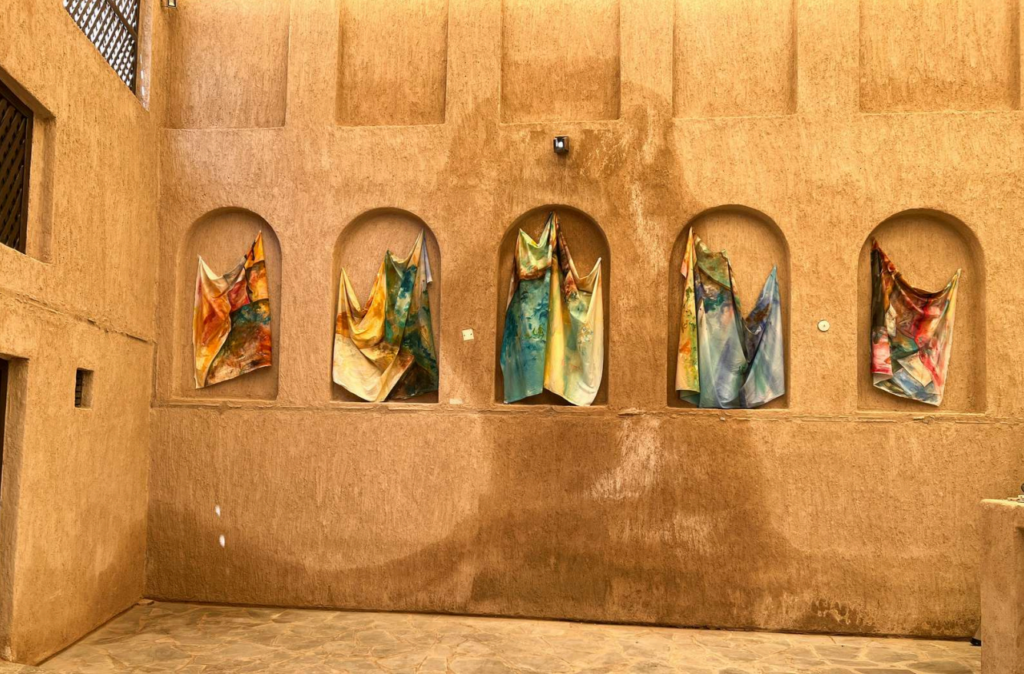
Salmah Almansoori, Unfolding, 2022-2024, Mixed Media on Cotton Fabric, Variable Dimensions.
Image courtesy of the artist and Firetti Contemporary.
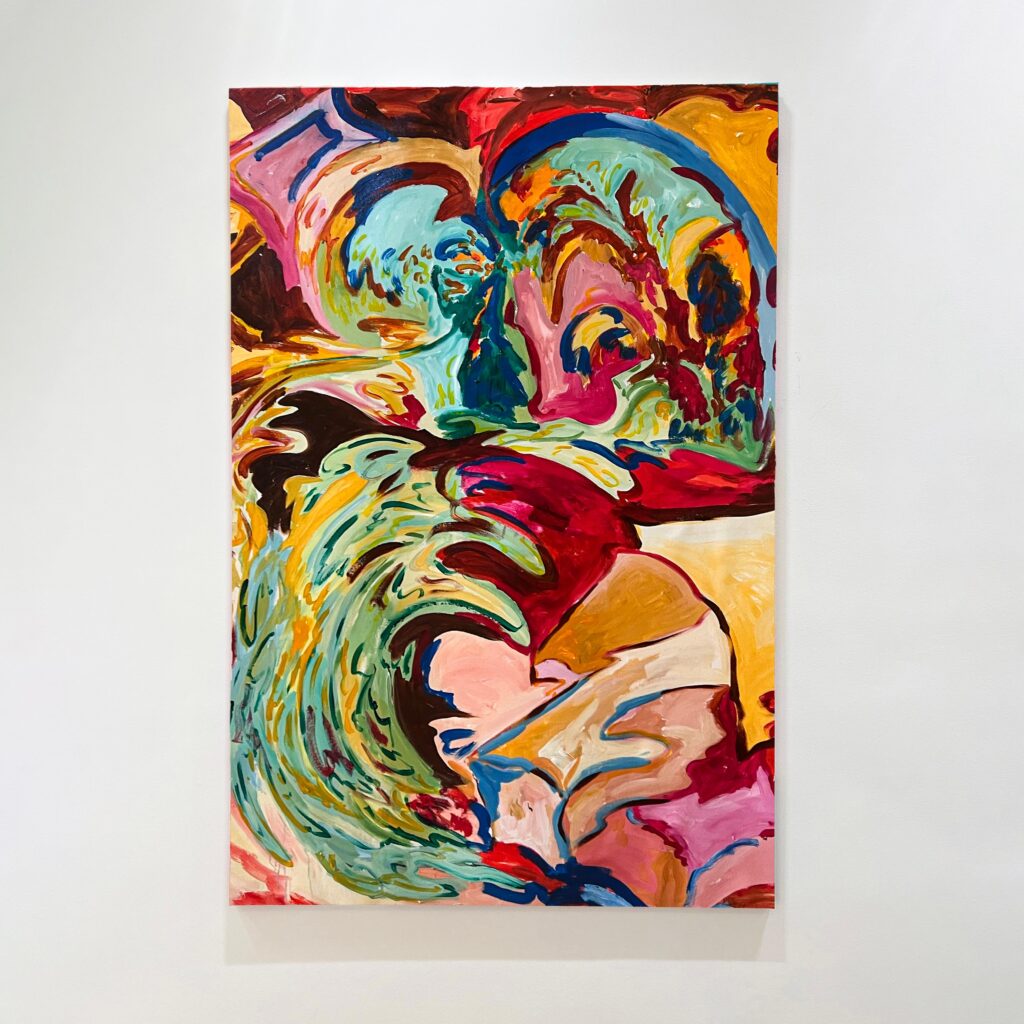
Salmah Almansoori, I Was a Forgotten Moment #12, 2024, Acrylic on Canvas, 100 x 150 cm each.
Image courtesy of the artist and Firetti Contemporary.
In Doors (2022), abandoned architecture already carries the heaviness of human absence. Found material from the site becomes part of the work, while open and closed thresholds suggest access, exclusion and whatever may have happened beyond them. Around the same period, Demolished (2021-2023) builds a visual record of Ghayathi structures facing destruction, concentrating on doors, windows and objects that might disclose something about the people who had passed through them.
By Who I Became (2023), memory has moved onto the object itself. Photographs are transferred onto tiles taken from lived domestic environments. Some images remain clear, while others scratch, blur or disappear. Almansoori made hundreds of these fragments, initially trying to perfect every transfer before accepting the damage and incomplete recollection as part of the work. A family image does not float on neutral paper here. It sits on a piece of floor or wall that has already witnessed another life. Memory gains a surface, and the surface has its own memory.
Unfolding (2022-2024) takes that interest into fabric, folds and the division between public and private space, hiding intimacies inside the physical structure of the work. In the ongoing I Was a Forgotten Moment (2023-ongoing), abandoned objects and fractured observations are pulled into increasingly layered paintings. The series later darkened during a period and context where Almansoori felt isolated; muted color and fragmented compositions turned the things she was observing around Ghayathi into a record of her own psychological weather.
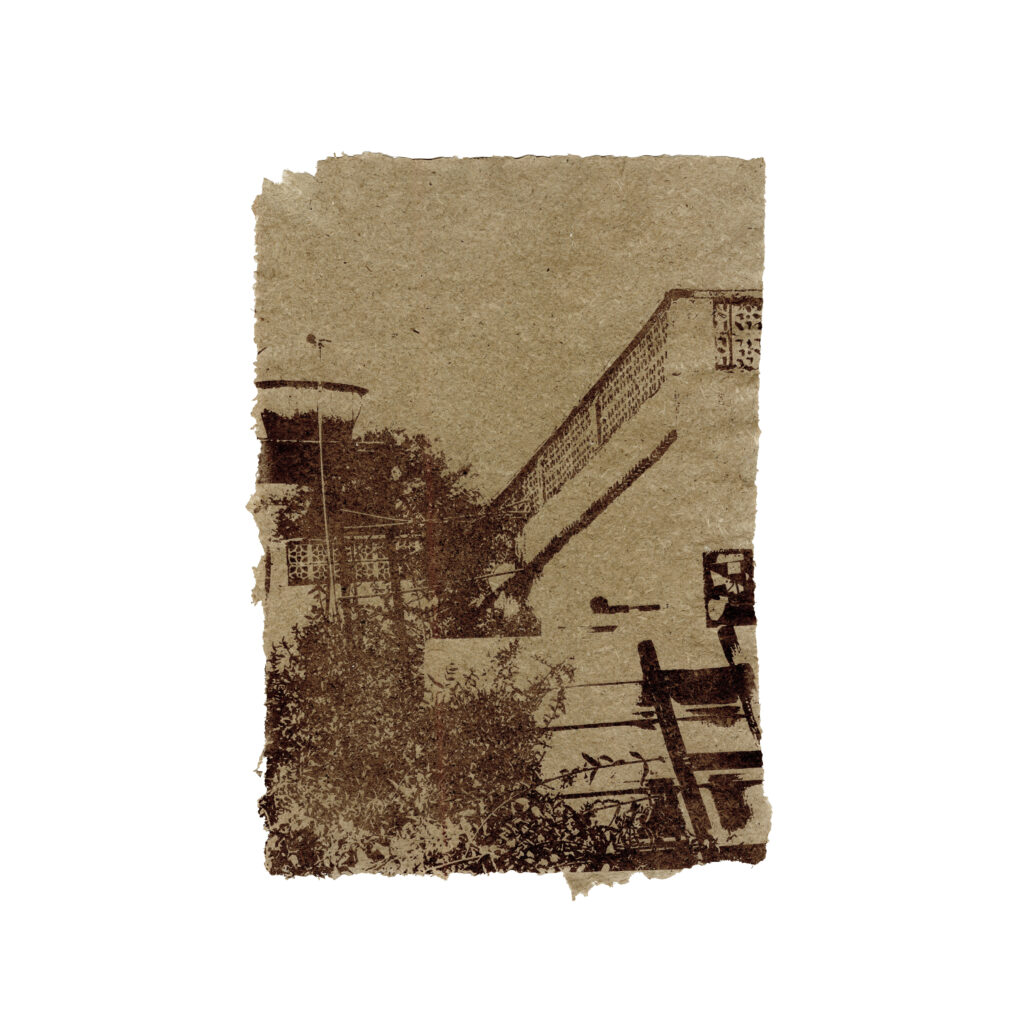
Then the support begins to matter as much as the image. In Of the Palm (2024-ongoing), handmade palm paper meets laser engraving – and in turn, fibrous irregularity is placed under technological precision. Can I Still Consider You Home? (2024-ongoing) pushes further. Alfalfa grass sourced from Ghayathi becomes handmade paper before architectural fragments are laser-engraved into its surface, producing what Almansoori describes as both mark and scar. The city is no longer sitting politely in front of her as subject matter. It has been cut, pulped, pressed, dried and burned into an object.
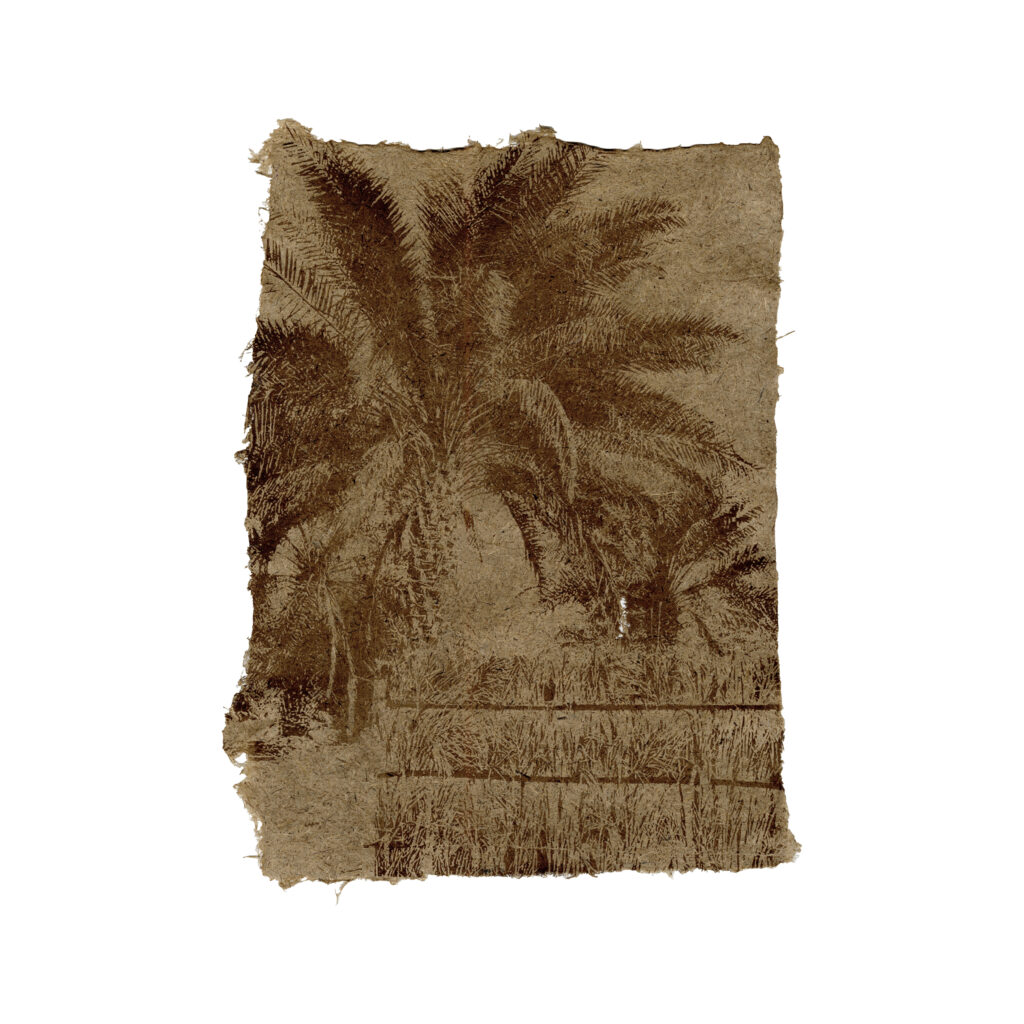
Salmah Almansoori, Of the Palm #22, 2026, Laser Engraving on Handmade Palm Paper, 29.7 x 21 cm.
Image courtesy of the artist and Firetti Contemporary.
Salmah Almansoori, I Still Consider You Home #10, 2026, Laser Engraving on Alfalfa Handmade Paper, 29.7 x 31 cm.
Image courtesy of the artist and Firetti Contemporary.
That physical logic sees one its strongest forms in The Weight of Absence (2025). While researching Ghayathi’s origins, Almansoori encountered conflicting accounts of its name. Her uncle recounted a history in which groundwater was discovered along Bedouin routes and described as ghaith (grace or relief), leading to settlement around the source. The original well itself can no longer be located. Older relatives remember only approximate sites, and the area has been demolished. Almansoori’s paper casts contain plants, fibers and collected material from around local water systems, giving physical weight to a history whose central object has vanished.
Tracing What Remains (2025-ongoing) continues with palm and alfalfa fibers gathered locally, turning the surface into what she considers an archive for a city that has remained comparatively undocumented. Rituals of Becoming (2025), natural fiber stretches over styrofoam and metal armatures at Al Ain Oasis, producing forms that hover somewhere between inherited object and imagined future artefact.
The question has quietly flipped: the artist who once wondered about people who had left abandoned houses is beginning to imagine what future people might make of what we leave behind.
Saudi Arabia opens the practice outward again. The road trip that produced You Brought Me Back to Life (2024) arrived during a period of severe burnout; Almansoori returned to watercolor, filled a sketchbook, made thousands of photographs and experimented with materials including sidr and turmeric. The places were new, yet palm farms, Bedouin practices, domestic furnishings and abandoned structures repeatedly felt familiar. Ghayathi had taught her how to look. Saudi Arabia showed how far that gaze could travel.
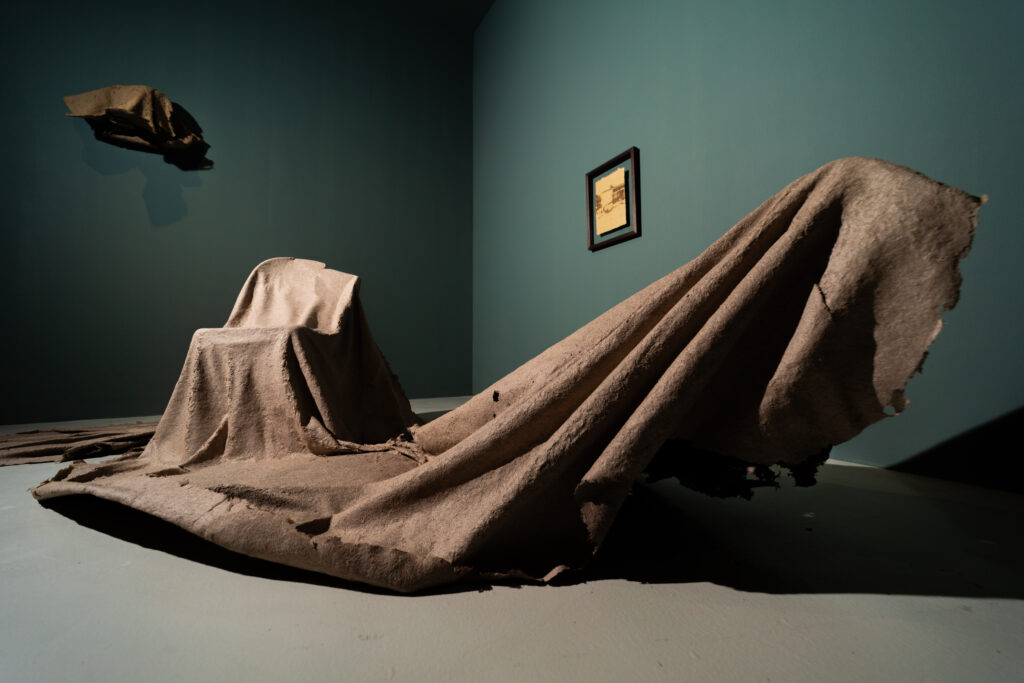
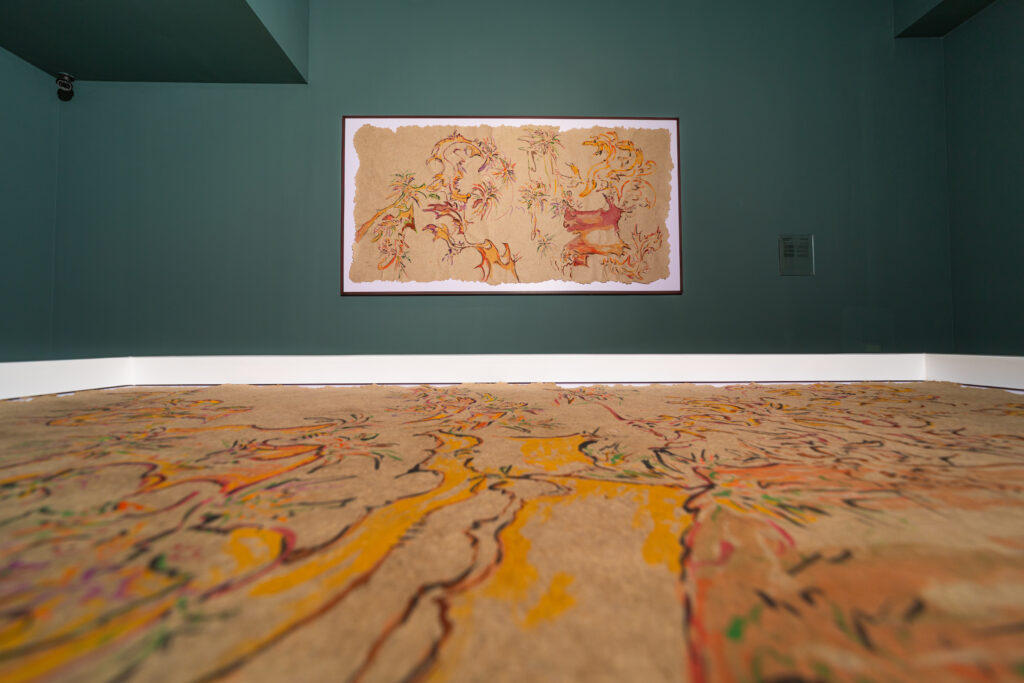
Salmah Almansoori, The Weight of Absence, 2025, Handmade Palm Paper Casts, Variable Dimensions.
Image courtesy of the artist and Firetti Contemporary.
Salmah Almansoori, Tracing What Remains, 2025-ongoing, Watercolours on Handmade Palm and Alfalfa Papers, Variable Dimensions. Image courtesy of the artist and Firetti Contemporary.
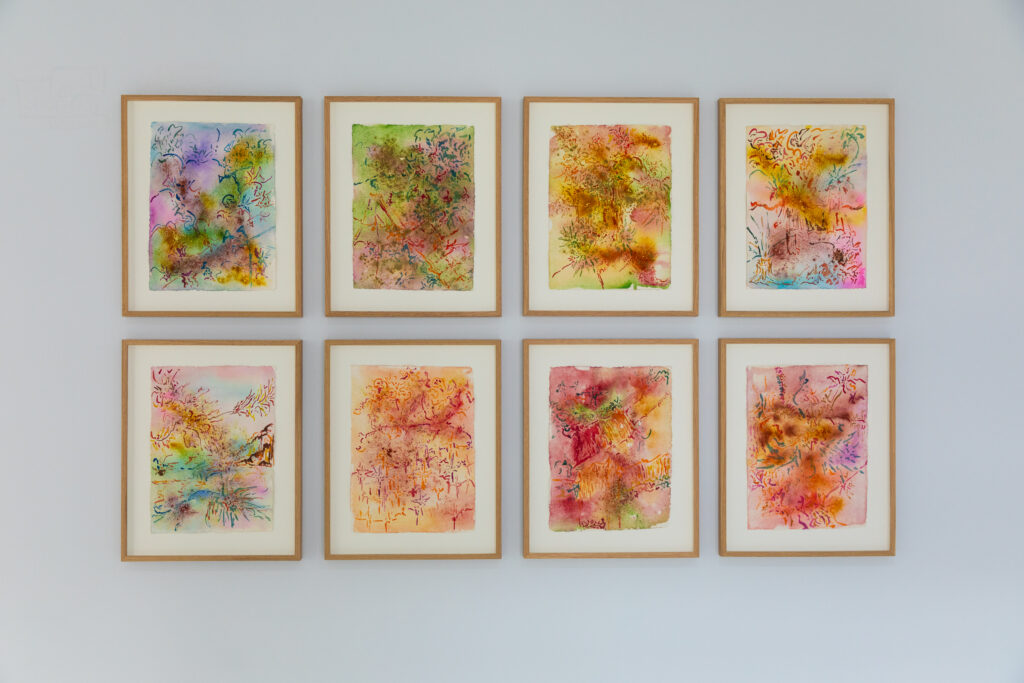
The 2026 Witnessing the Fragments carries the trip forward using red chili, za’atar, turmeric and watercolor on handmade Indian cotton paper. Almansoori later explained that these were the same spices associated with the Saudi experience, now being used back in the UAE, allowing one place to resurface inside another. Geography, by this stage, has become porous.
Almansoori calls part of her approach “speculative archiving”: artist, witness and archivist occupying the same body, with no claim that memory can be made complete or historically neutral. It is a rather apt description for a practice in which preservation repeatedly requires transformation. Fiber is broken down to become paper. A laser burns an image into grass. Photographs lose pieces of themselves during transfer. Spices dissolve into pigment. Abandoned objects are removed, carried, rearranged and asked to speak again.
Perhaps that is why and how Who I Became eventually gives way to Who I Become. The first looks backward at the surfaces and people that formed Almansoori. The second stays deliberately unfinished. Home, for Almansoori, has become something negotiated through each return, each object and each new layer of evidence.
She began with the stories of people who had left. Somewhere along the way, she built an archive from the things that stayed.
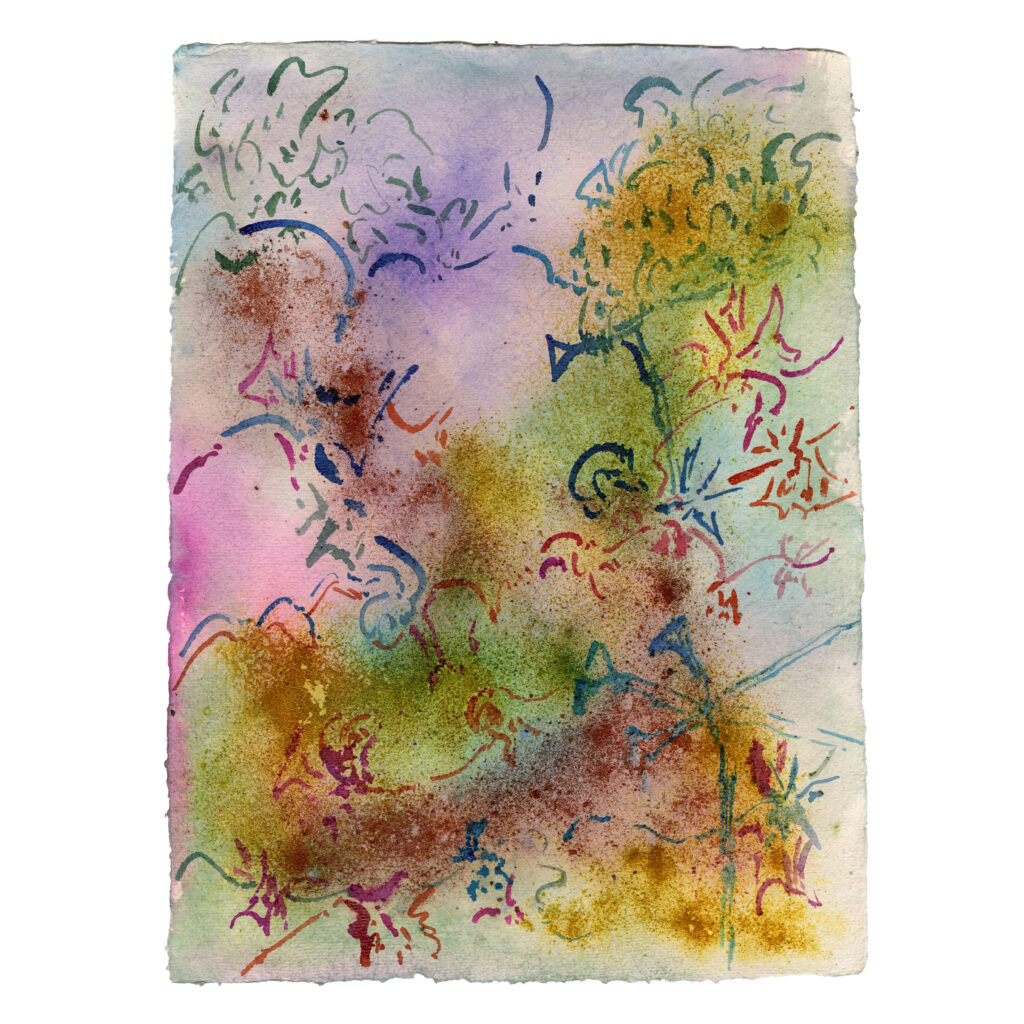
Salmah Almansoori, Witnessing the Fragments 11/16, 2026, Watercolour and Collected Spices on Handmade Indian Cotton Paper, 28 x 38 cm. Image courtesy of the artist and Firetti Contemporary.
Salmah Almansoori, Witnessing the Fragments, 2026, Watercolour and Collected Spices on Handmade Indian Cotton Paper, 28 x 38 cm each. Image courtesy of the artist and Firetti Contemporary.