
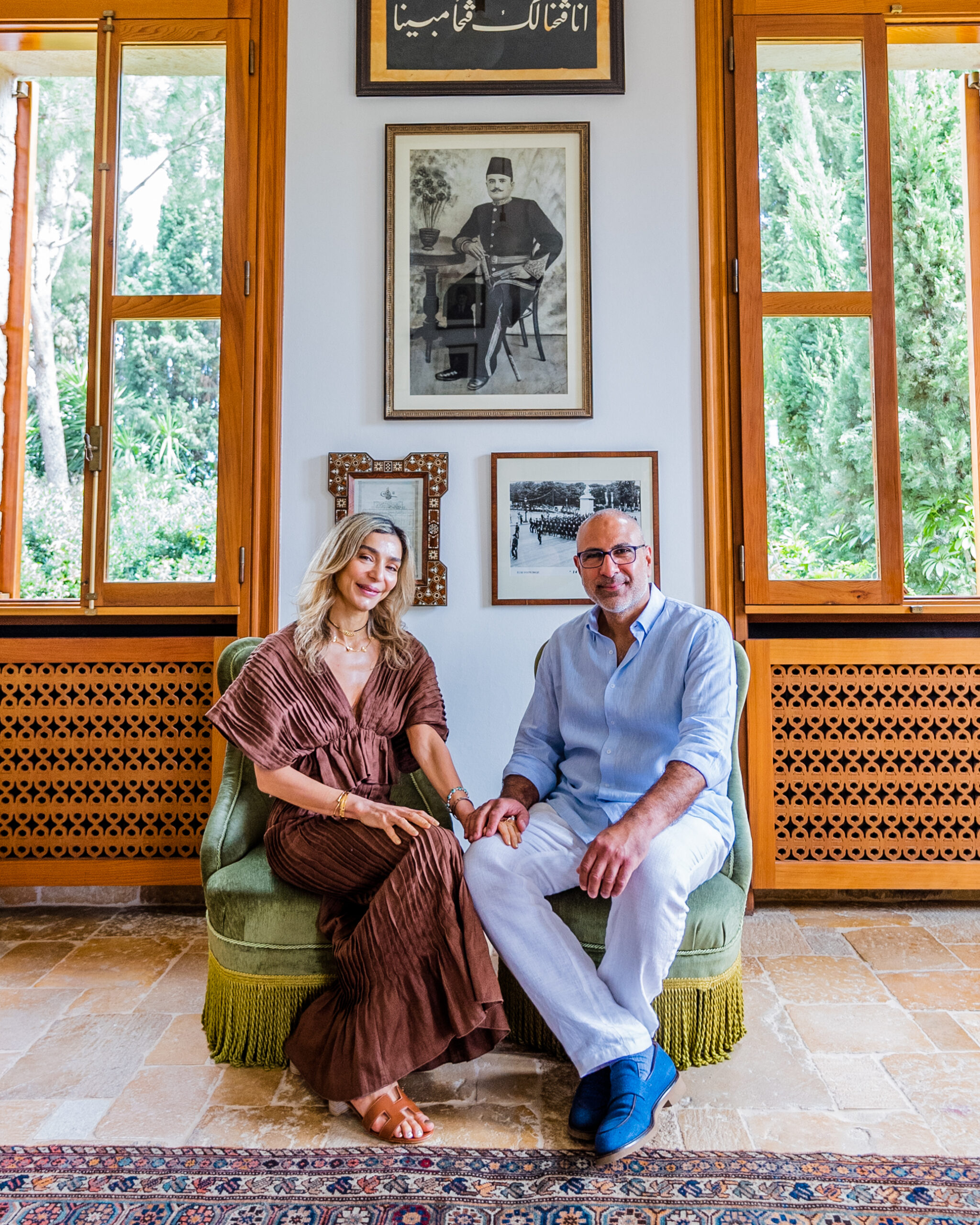
Portrait of Ghada and Bahjat El-Darwiche, Dar Zefta, 2023.
In 2026, as war raged on across the South and in Zefta itself, Zefta Art House opened as a space for another kind of encounter. Part residency, studio, exhibition space, research site and gathering place, the House has no rigid formula by design. It creates room for artists, residents and different forms of knowledge to meet, while asking those who come to it to approach the South with curiosity rather than a fixed idea of what it represents.
Within the wider ecosystem built by the El-Darwiche family across the years through Dar Zefta Foundation and Dar Zefta guesthouse, the Art House extends that commitment into the village’s cultural life. In a South too often viewed through conflict, displacement and recovery, it creates the conditions for art, exchange and possibility to grow from where people already are.
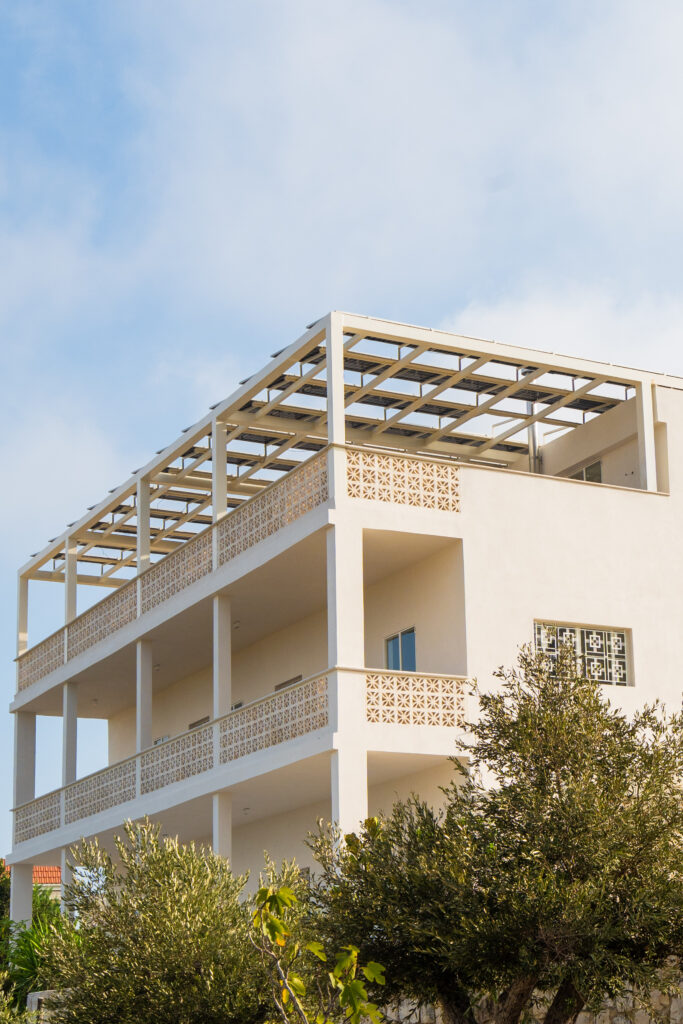
Zefta Art House
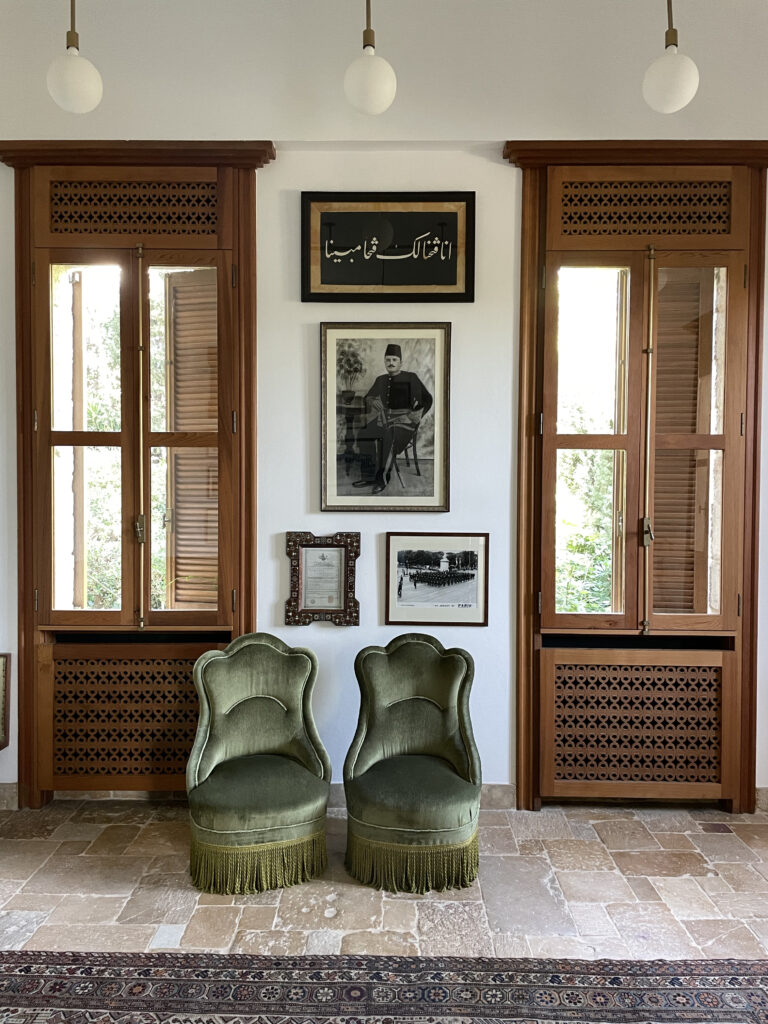
Dar Zefta
Dar Zefta, the Dar Zefta Foundation, and Zefta Art House have emerged at different stages. Could you take us through the evolution of these initiatives, and the thinking or circumstances that led from one to the next? How do you reckon these different initiatives and projects speak to and complement each other today?
Dar Zefta Foundation grew from a family tradition of giving back to Zefta, the village where our family is rooted. It began as personal acts of care passed from one generation to the next. In 2017 we understood that the tradition needed a clearer structure, and a vision that could respond to the village today. The foundation brought together family members from different backgrounds around one purpose: the social, cultural and economic life of Zefta and its surroundings.
Its work developed through three connected paths: creative community development, cultural and nature trails, and local social and economic renewal. The wider ambition is for Zefta to become a role model other villages can learn from and interpret according to their own realities. One village multiplying its influence far beyond its own boundaries.
Dar Zefta guesthouse grew from our work around heritage and culture. We restored our century-old family home as a place where southern hospitality, architecture, heritage and contemporary culture could meet. It offers visitors an experience of the region that comes from within it. It also shows what can emerge when a community looks again at what it already has.
Zefta Art House grew through the foundation’s creative community work. It builds a stronger environment for art in the South.
Each initiative has its own identity. They belong to the same story. Dar Zefta welcomes people into the village. The foundation works with its wider needs. Zefta Art House creates a home for artistic exchange.
What was it about art, specifically, that led you to create Zefta Art House? What did you want this project to introduce or make possible that was different from what you had already been doing through Dar Zefta and the Foundation?
Zefta Art House follows the wider vision of the foundation, focused on one thing: the creative spirit of the region. In villages facing economic hardship and the continuing tension of war, art can easily be treated as secondary. I believe these conditions make it more necessary. People need ways to express what they are carrying, come closer to one another, and imagine a life beyond the circumstances imposed on them.
Art also creates space for collective healing. It does not erase suffering or offer simple answers. It allows people to approach difficult experiences together, give form to emotions, and recognize that their memories are not carried alone.
The South has never lacked artists or creativity. What is missing is the infrastructure that allows this energy to grow while remaining connected to the place it came from. Studios, exhibitions, conversations, professional opportunities; for these, artists leave for Beirut. Younger people grow up without seeing artistic practice as something they can participate in.
We wanted Zefta Art House to create the conditions for a local art scene. That begins with a safe and trusted place where people can gather regularly. Then support for local artists, room for younger people to experiment, encounters between local practices and different perspectives. It can also create economic movement through production, commissions, exhibitions, sales, and collaborations with local craftspeople.
La Route des Arts in June 2023, Shared Presence in January 2026, and Under One Sky in August 2026 were the initial endeavors where we began exploring this. They showed us what happens when artists are given time, space and genuine contact with one another. Zefta Art House gives this work a home, and allows art to become part of everyday life in the region.
How would you define Zefta Art House today, both as a space and as a cultural project? What kinds of activities, encounters, and forms of exchange do you want it to make possible?
A living cultural space with a clear purpose and no rigid formula. The South is living through unstable conditions, and the needs change quickly. The house must be able to listen and respond.
At its core it creates encounters; between artists, local communities, visitors, craftspeople and cultural workers who may not otherwise meet. It functions across a residency, a studio, an exhibition space, a place for research, or a room for a shared meal and a long conversation.
The house is also part of its village. It should never feel like a cultural project placed in Zefta without belonging to its daily life. People should be able to enter, ask questions, participate, and eventually recognize the space as something that also belongs to them.
Its programs may change. Its responsibility does not: to protect space for artistic life in the South and allow it to grow according to the realities around it.
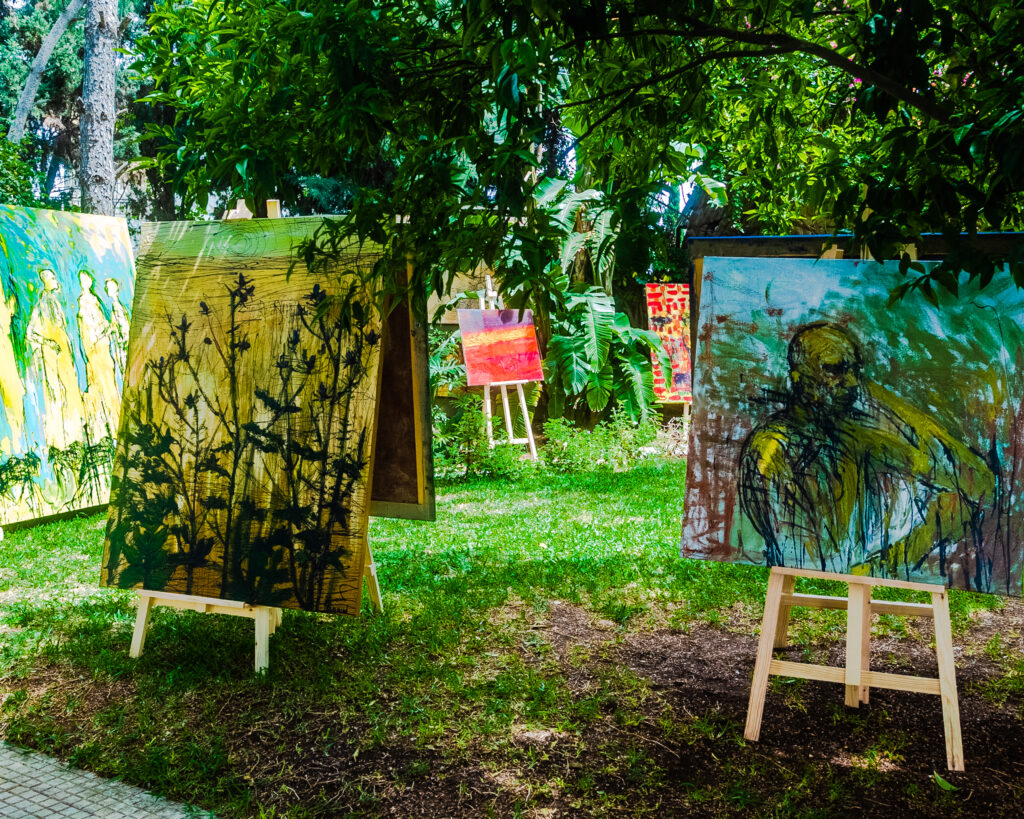
La Route Des Arts, Collective Exhibition at Dar Zefta, 2023.
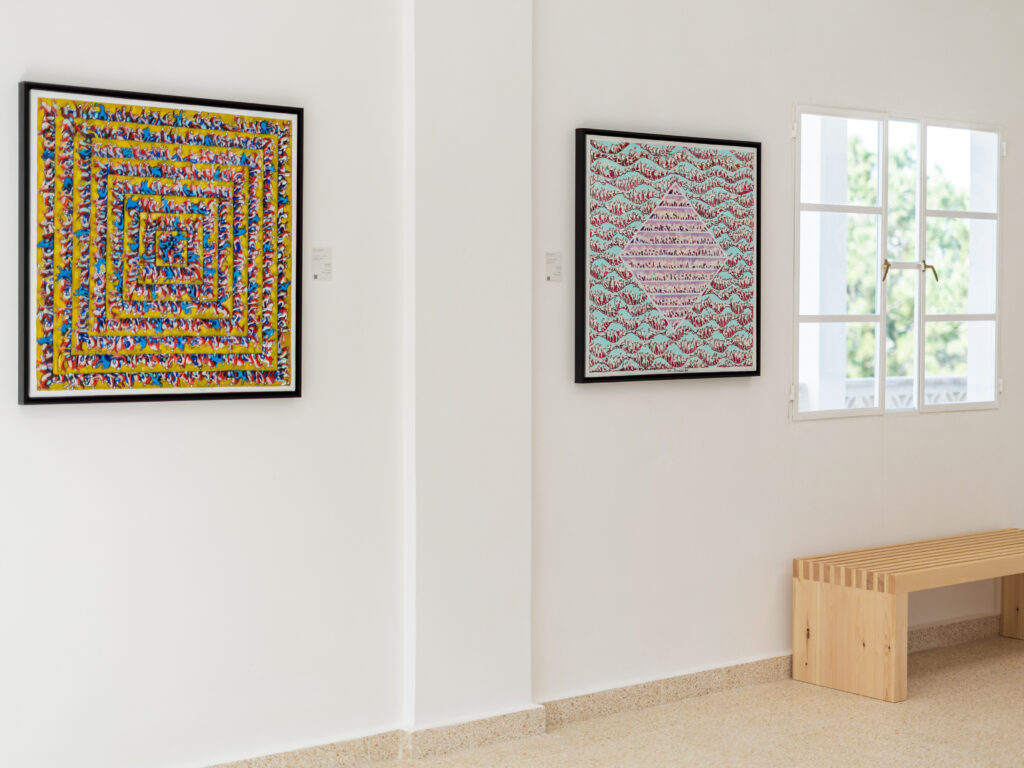
Shared Presence, Inaugural Collective Exhibition at Zefta Art House, 2026.
Could you walk us through the residency programme at Zefta Art House? How is it structured, who is it intended for, and what kind of experience do you want the residency to offer artists?
The residency is for artists who want to spend meaningful time in the South and allow the place to enter their process. We are interested in artists from the region, across Lebanon, and from other cultural contexts around the world; on one condition: they approach Zefta with curiosity rather than a fixed idea of what the South represents.
Artists encounter the village through its people, landscape, architecture, memories and everyday rhythms. The program offers time and space to work, curatorial support, local connections, and exchange with other artists. Depending on the project, this may open into workshops, shared meals, an open studio, or an exhibition.
The outcome may be research, a new question, or the beginning of a longer relationship. What matters is that a genuine exchange takes place; the artist leaves affected by the region, and offers something meaningful in return: an artwork, knowledge, a relationship, a different way of seeing.
When you encounter an artist or a practice that you consider bringing to Zefta Art House, what is it that catches your attention? What makes you want to pursue that conversation further?
Openness to exchange. Artists who are curious about what they do not yet know and willing to let an encounter influence their practice. A distinct voice matters, but so does the ability to listen, share space, and remain open to other forms of knowledge.
What makes us pursue the conversation is a readiness to explore the many layers of culture within the region. The South holds different histories, beliefs, memories and ways of living. It cannot be understood through one image, especially the familiar image of conflict.
We do not expect an artist to speak on behalf of the region. We want to see what happens when their perspective meets the place honestly. That encounter offers the village and the wider region new ways of looking at art, and allows people to recognize something of themselves through an unexpected perspective.
How do you see Zefta Art House contributing to Lebanon’s broader cultural landscape? What kind of role do you hope it can occupy alongside the galleries, institutions, independent spaces, and other cultural initiatives already operating in the country?
Lebanon’s artistic richness comes from the histories, cultures, beliefs and identities living closely within it. The South is part of that cultural ecosystem. Much of the country’s contemporary art infrastructure is not; it remains concentrated in Beirut.
Zefta Art House can help bridge this distance in both directions. It gives artists in the South a place to research, produce, meet others and present their work. It can then connect them with galleries, institutions, independent spaces and audiences across Lebanon and beyond. It can also invite these partners to encounter the South directly.
Its role is not to compete with existing spaces. It is to add another source of creative energy to the country and strengthen the cultural movement between its regions. When artistic production can begin in the South and circulate through the wider ecosystem, Lebanon’s art scene becomes more connected to the full geography from which its artists emerge.
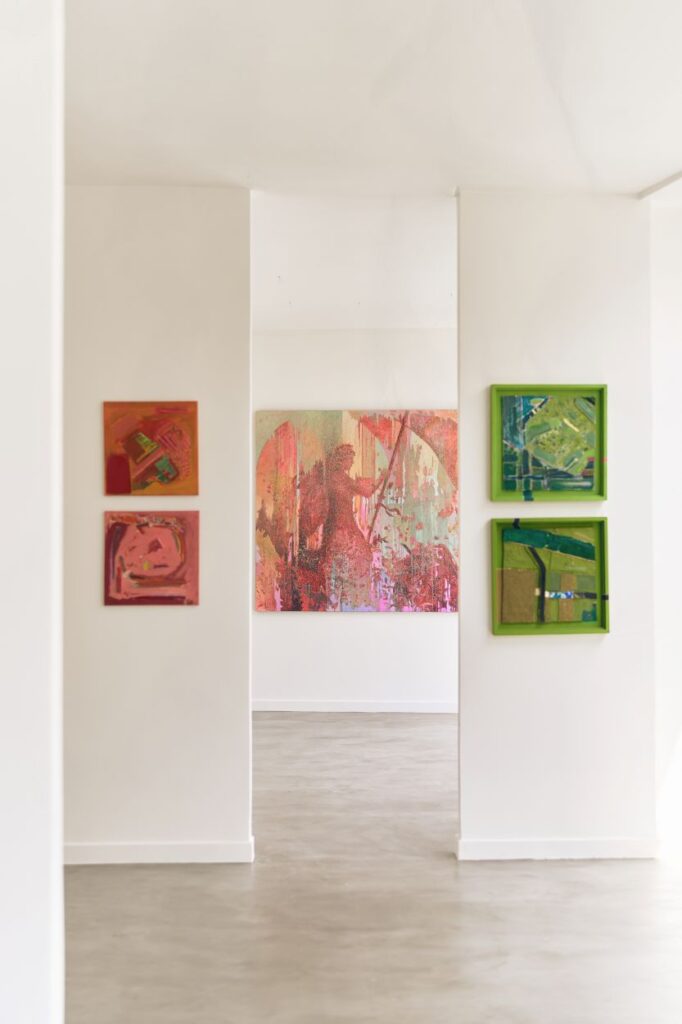
Under One Sky, Collective Exhibition at No Chef in the Kitchen, 2026.
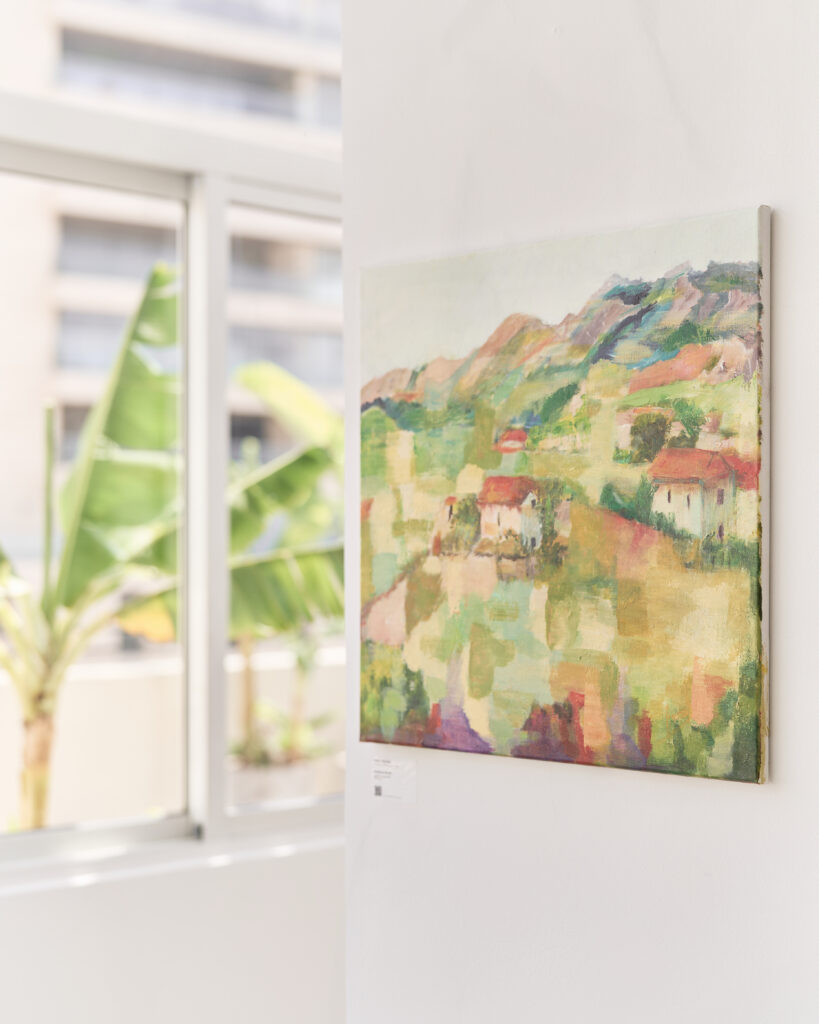
Under One Sky, Collective Exhibition at No Chef in the Kitchen, 2026.
South Lebanon has long been shaped by cycles of conflict, territorial tension, displacement, and rebuilding. How does this layered history inform the meaning and mission of Zefta Art House today, and how does it influence the way you think about the relationship between art and place?
The South carries histories of conflict, displacement, return and rebuilding. These experiences remain present in the landscape, in family memory, and in the way people understand home. Zefta Art House cannot separate itself from this reality.
But the South should not be defined only by suffering. It also carries humour, tenderness, hospitality, knowledge and creative traditions that have endured through instability. When attention focuses only on destruction, these parts of the region disappear from view.
Art allows people to remember, question, express and imagine without forcing their experiences into a simple story. Zefta Art House does not claim to speak for the South. It creates space for different voices to explore what this place has carried and what it may still become. In a region repeatedly asked to rebuild, imagination is part of collective healing and part of how life continues.
As Zefta Art House develops alongside Dar Zefta and the Dar Zefta Foundation, what would you like these different initiatives to become over the longer term? What do you hope they can make possible for artists, audiences, and the cultural life of the region?
A connected ecosystem, where culture, hospitality, nature and local development support one another. Dar Zefta welcomes people into the region through its architecture, food, stories and hospitality. The foundation continues responding to local social and economic needs. Zefta Art House gives artists the opportunity to research, create, exchange and present their work.
Most of all, we want the next generation to believe in what this region is capable of. Young people should not feel that creativity only becomes possible after leaving their village. They should be able to encounter artists, experiment, learn, and imagine a creative future from where they already are.
If these initiatives can protect that sense of possibility and give it the structure to grow, they can help people see the South beyond survival, and create new opportunities from the knowledge, culture and resources already present within it.
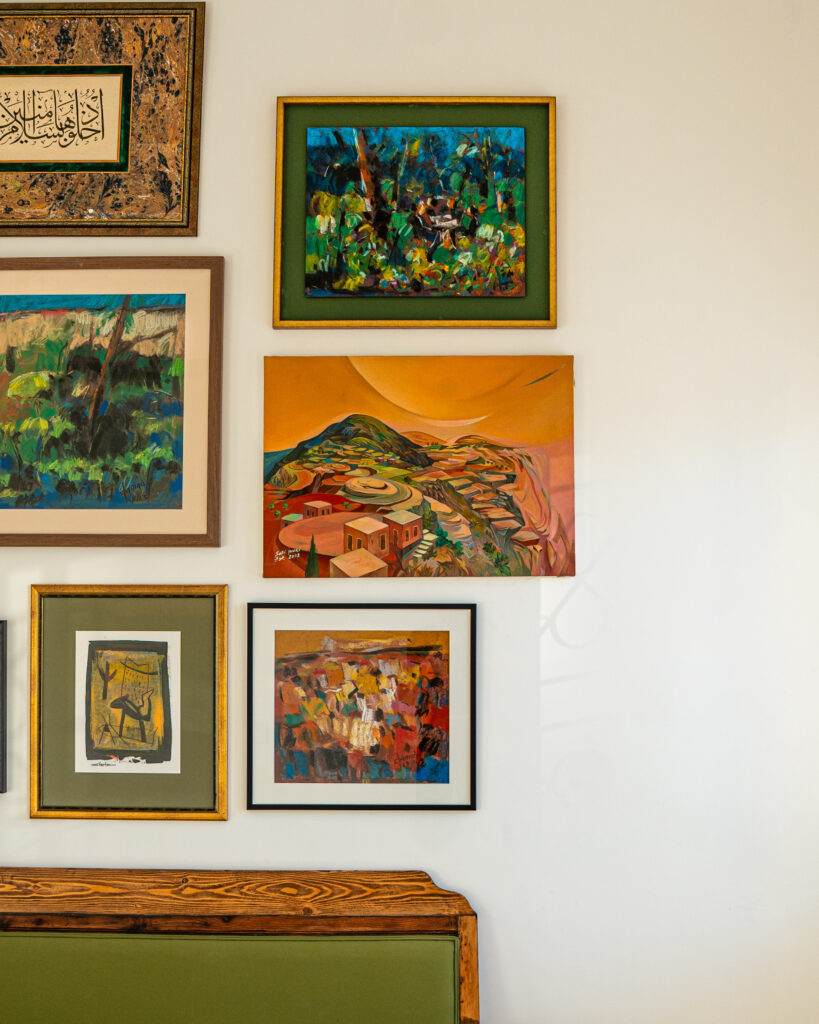
Zefta Art House.
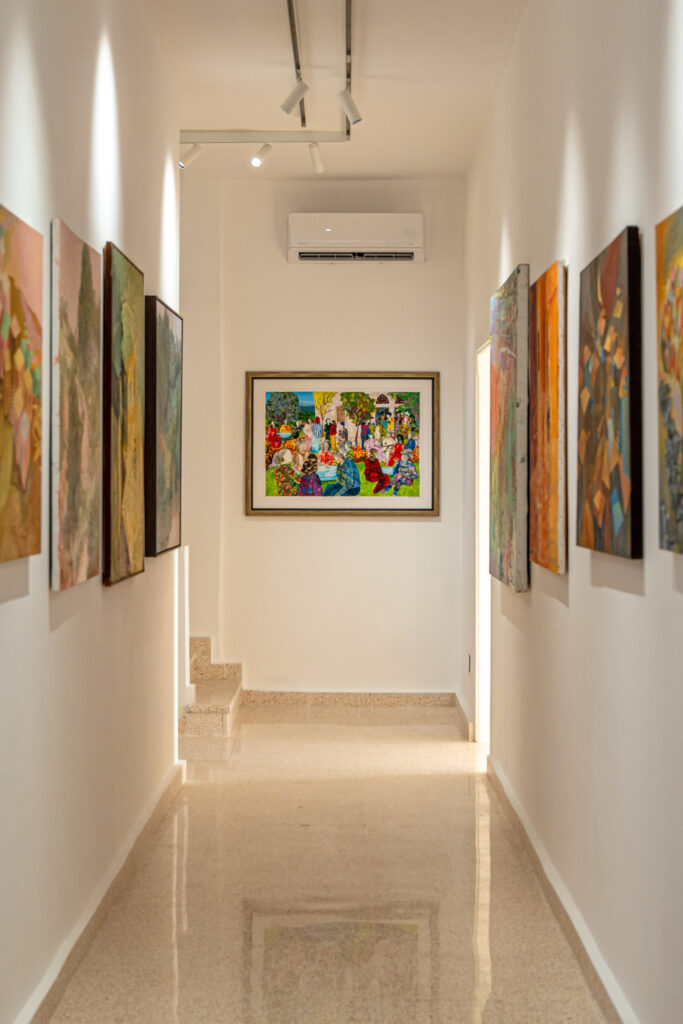
Zefta Art House.